This exhibit wants you to rethink the humble landscape photo
The divisions between land and sky are not always simple.

Hi,
I'm not much of a photographer but I do, occasionally, manage to make an image I really like.
Once I snapped a photo from the window of a plane that captured the final vestiges of a sunset framed against an ocean of clouds. The composition is flawed: It's low-res and crooked and shot through a blurry wedge of plexiglass. But there's something very satisfying to me about the way the horizon line bisects the image, creating a clear divide between the orange and blue of the sky and the gloomy darkness of the clouds below:
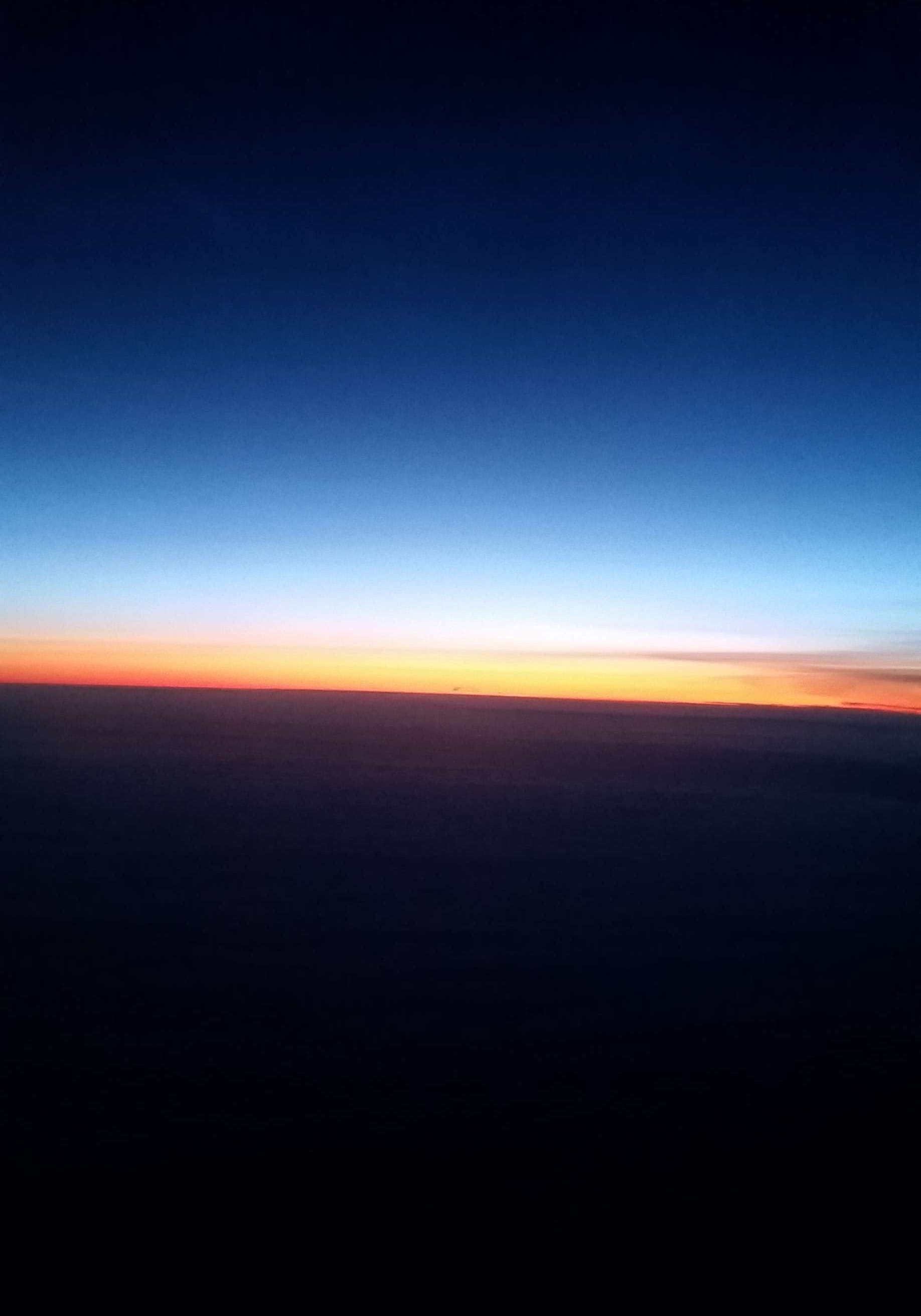
I wouldn't call my photo high art and certainly wouldn't suggest that it deserves a place in a museum gallery.
But I did think about it after perusing the (much better) photography on display at the Sheldon Museum's ongoing exhibit "New Horizons."
As the name suggests, the curated collection of photos takes the idea of the horizon line as its point of departure. Each of the images features a landscape with a distinctive — though never truly distinct — demarcation between ground and sky. Indeed one of the exhibit's core preoccupations is the intentional blurring of such sharp binaries as "ground and sky."
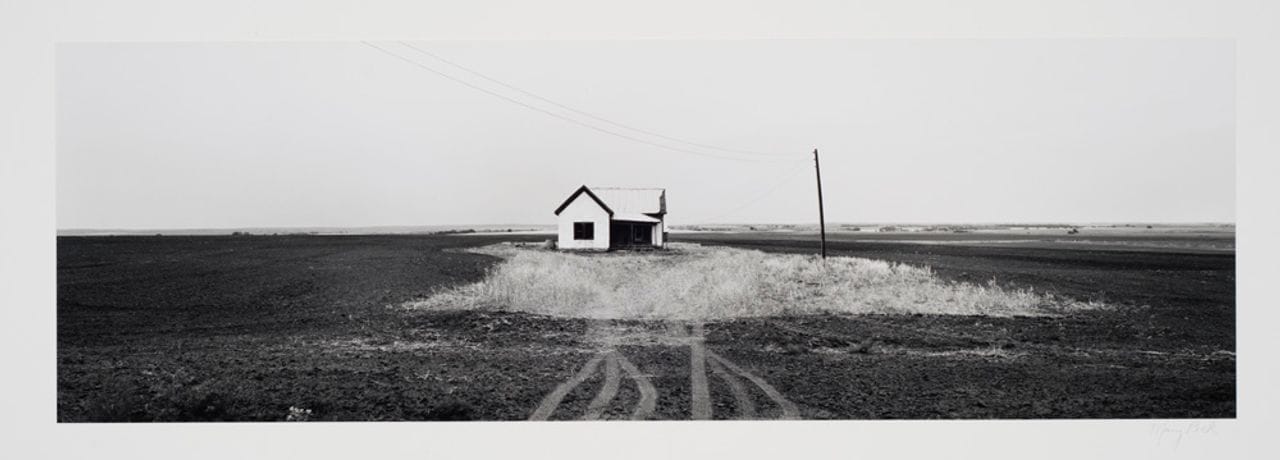
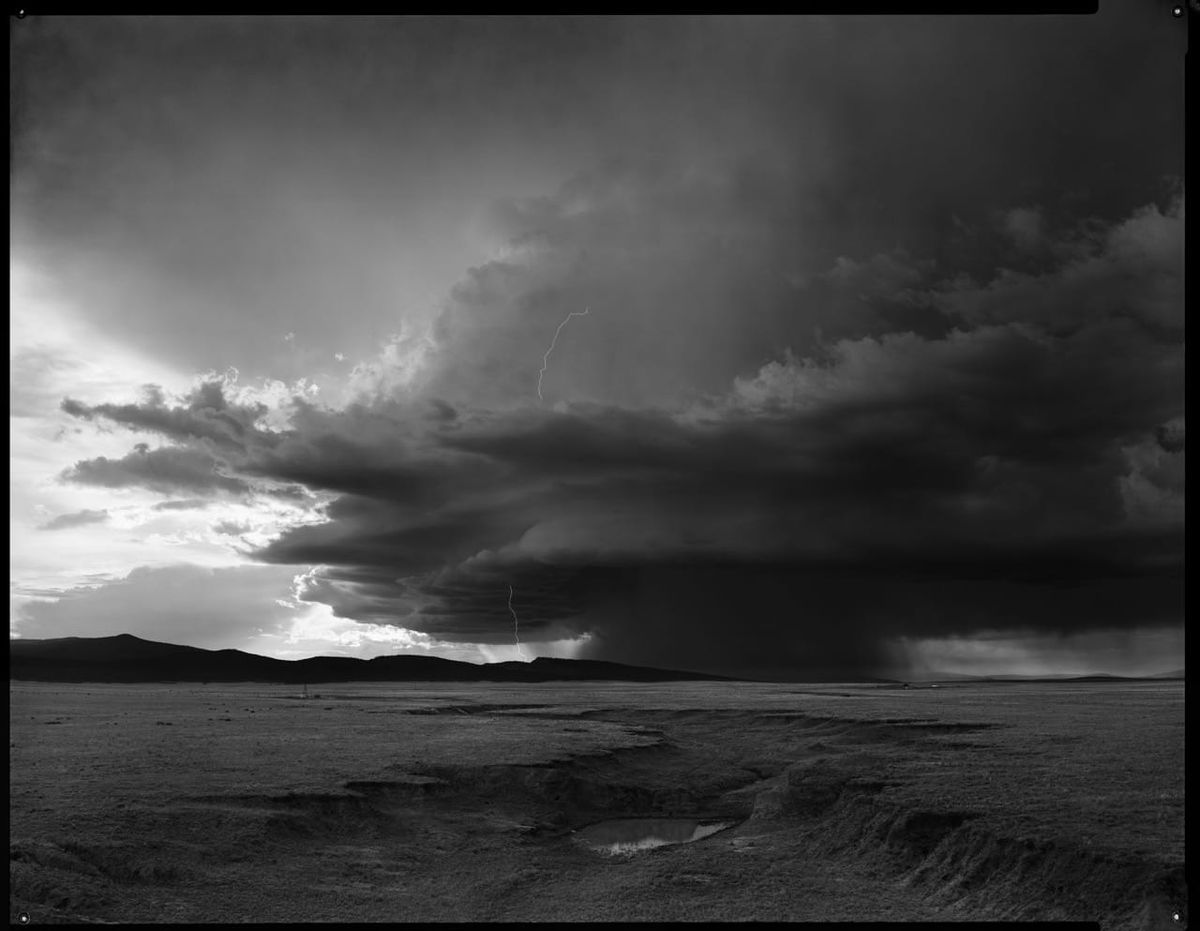
That's readily apparent in Great Plains Thunderstorm, where looming storm clouds flow almost seamlessly into the mountains and ground beneath them. But even a photo like Mary Peck's Lesley, Texas, which seems on first examination to contain a clean divide between dark textured field and ghostly white firmament, is not so simple: Take another look and you might notice that the house in Peck's photo seems to belong to neither land nor sky, while the electric pole next to it crosses the border, creating a kind of vertical counterpart to the horizon line.
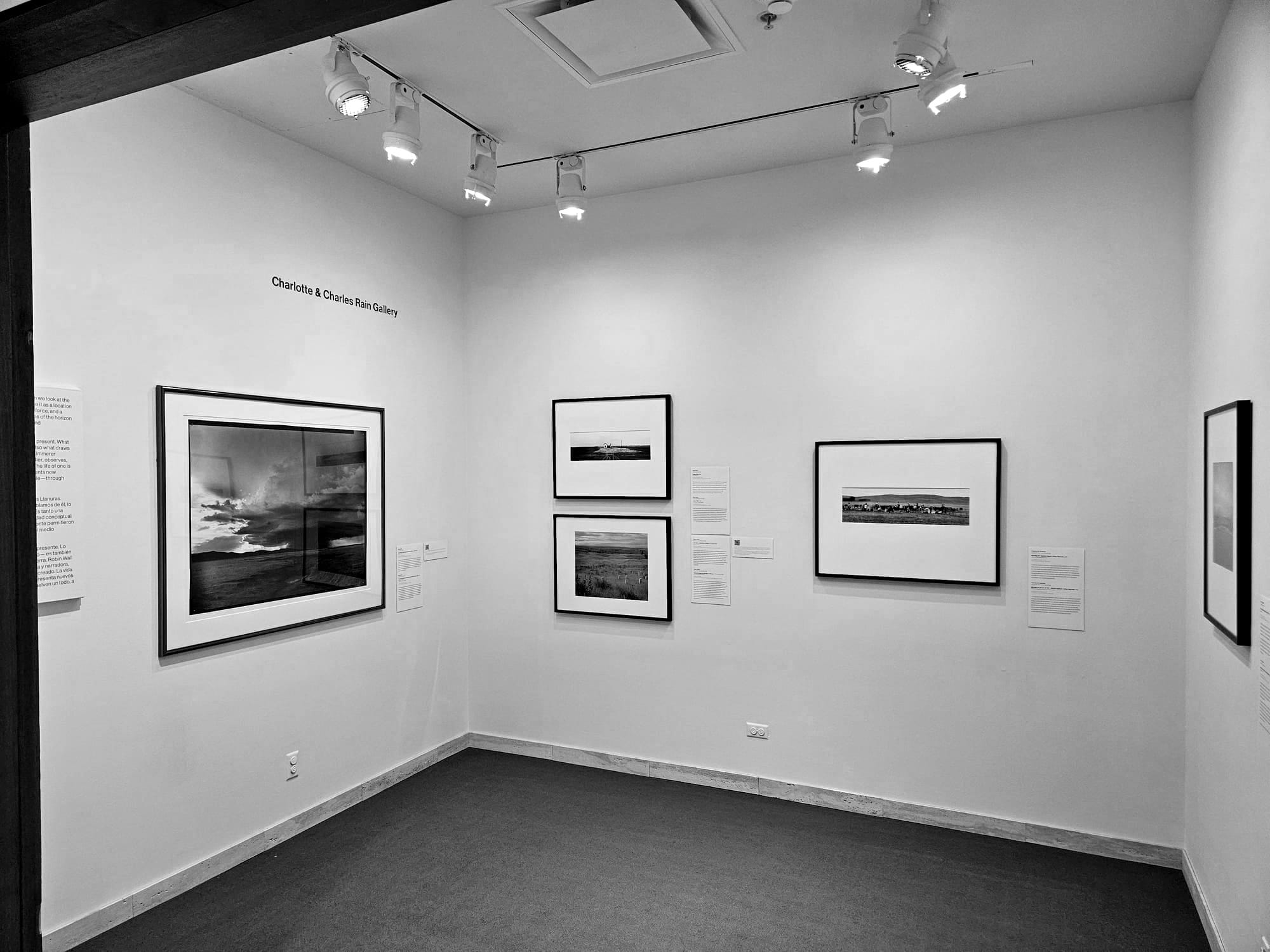
While the photos are striking, the exhibit is more than an exercise in aesthetic contemplation of beautiful landscapes. The curators, who are all UNL students, also want viewers to weigh the ideological assumptions of such images — including whose perspectives are represented and why. Photos of vast sweeping grasslands might lack the overt political implications of, say, an image of a protest. Yet there is a latent cultural significance to the "featureless" landscapes of the American middle west, one that has typically ignored the actual existing features (not to mention the actual inhabitants) in favor of elevating grand, abstract narratives of exploration and conquest.
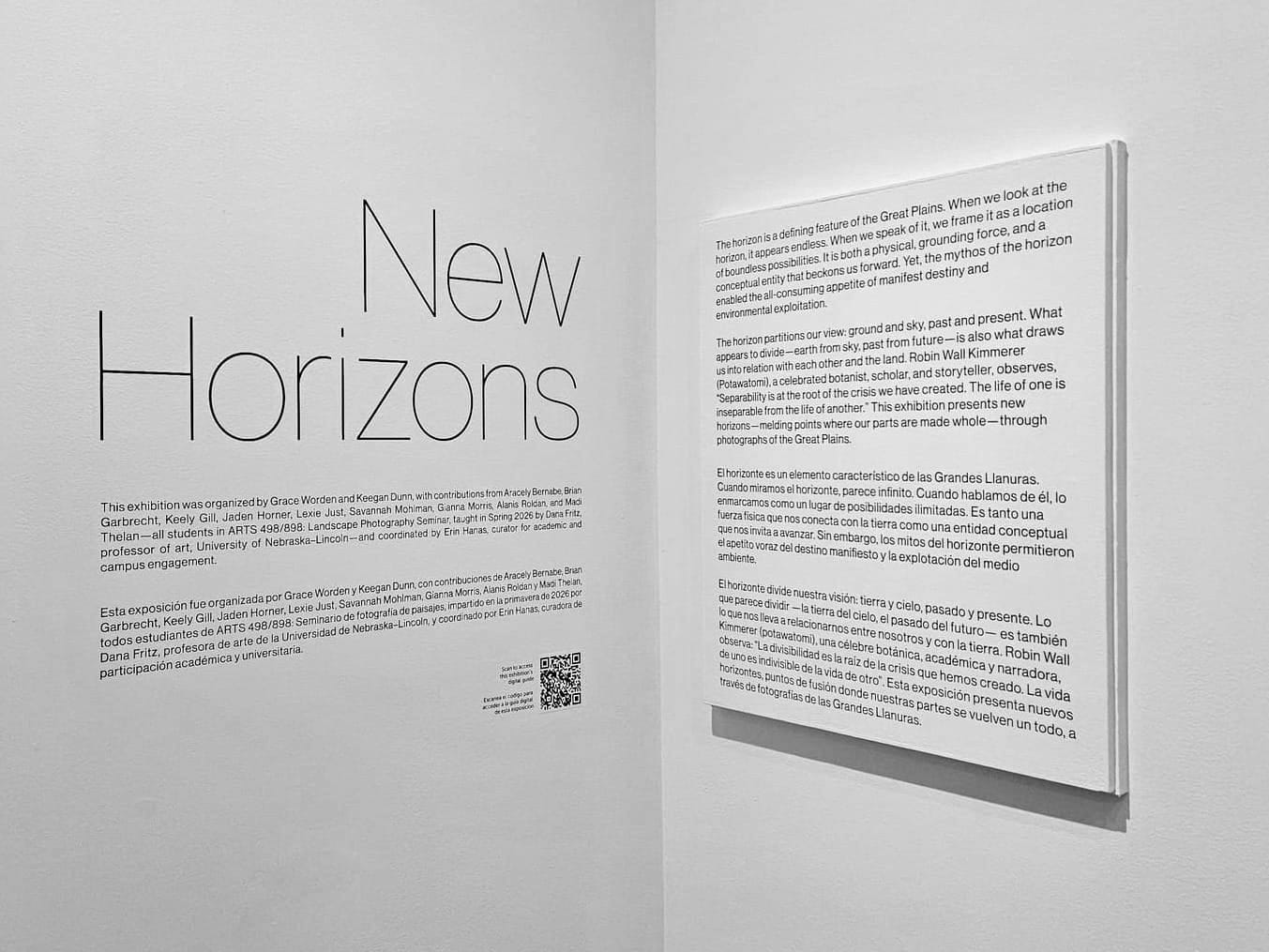
As the gallery description puts it:
The horizon is a defining feature of the Great Plains. When we look at the horizon, it appears endless. When we speak of it, we frame it as a location of boundless possibilities. It is both a physical, grounding force, and a conceptual entity that beckons us forward. Yet, the mythos of the horizon enabled the all-consuming appetite of manifest destiny and environmental exploitation.
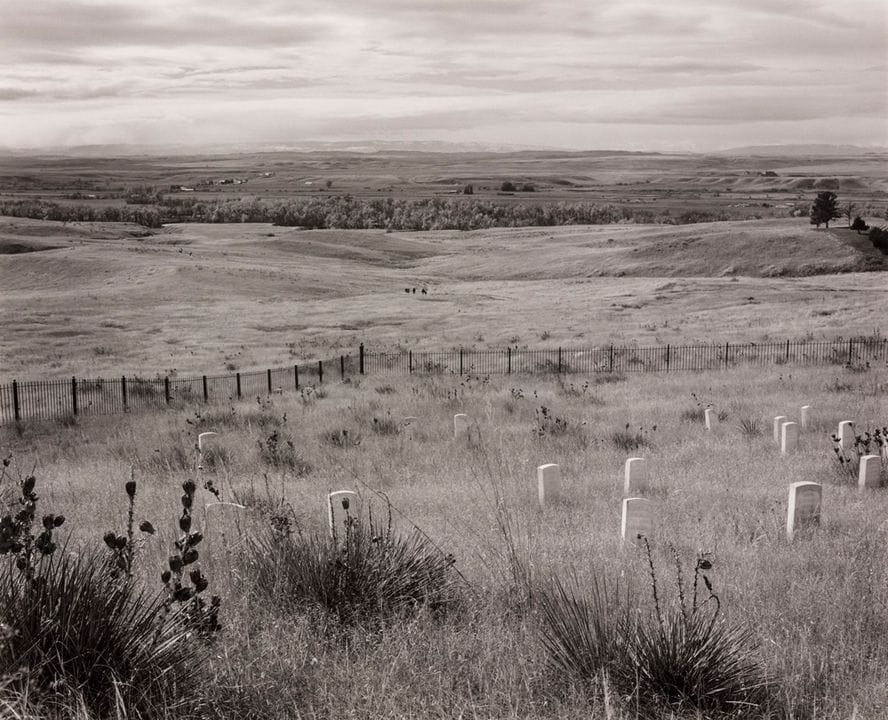
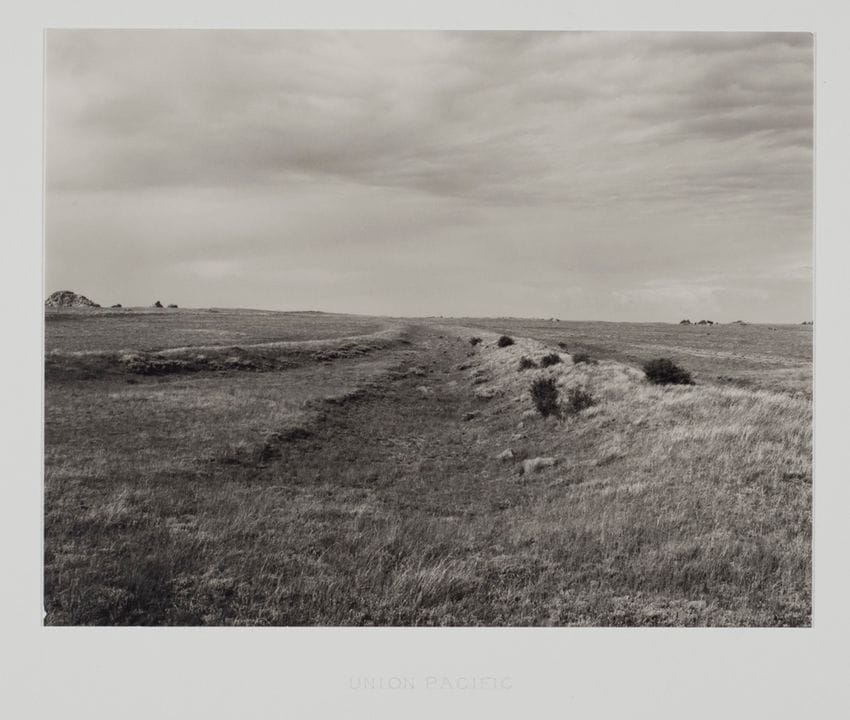
The photos that mostly clearly bring this idea into focus are those that deal with the marks humans have left on the Great Plains. In my multiple viewings of the exhibit, I was struck by two in particular: Little Bighorn Battlefield, Montana and Union Pacific #34.
The former is less about human presence than its absence. The image is dominated by a graveyard which, the description tells us, contains the bodies of US soldiers who died during the country's conquest of the West: "Though the US soldiers were soundly defeated—at what is often called Custer’s Last Stand—there is a stark lack of tribute for the fallen Indigenous scouts and combatants." As for the horizon, the sky in this photo is marginalized, pushed back to the top of the frame, leaving little space for any stories or histories other than those that occupy the foreground. Where a horizon line might fall in a more typical composition, there is instead a fence — a distinctly man-made border, which evokes the enclosure of the commons; a reminder that even as the US expanded and solidified its power over the continent, it diminished freedom in the Great Plains in real, tangible ways.
On the surface, Union Pacific #34 seems to bear even fewer marks of human presence. There are not even the negative signifiers of scattered headstones. Of all the photos in the exhibit, it is the one that presents most obviously as a "neutral" image of an apparently boring landscape. But as you've probably already realized, the photo is hardly that.
The image is part of a series, Westward: The Course of Empire, and the gouge at its center is not a natural curve of the plains. It is a scar, the memory of a Union Pacific railroad project that was abandoned in favor of an alternate track along a different route. To me, the photo is melancholy but not hopeless. The line that curves toward the horizon is evidence of violence done to the landscape, yes. But the land is also healing and reabsorbing the new terrain. The harm done to the Great Plains will never truly vanish; and it also doesn't have to fully define this place.
There is much more to these horizons than the relatively simple binary of my sunset photo: Not a line that splits an image cleanly, but a messy path forward, one that hints both at complex histories and different (better?) possible futures.
"New Horizons" is on display in the Sheldon Museum of Art's Rain Gallery until January 3, 2027. Admission is free. Find the exhibition guide here. Find the museum's hours here.
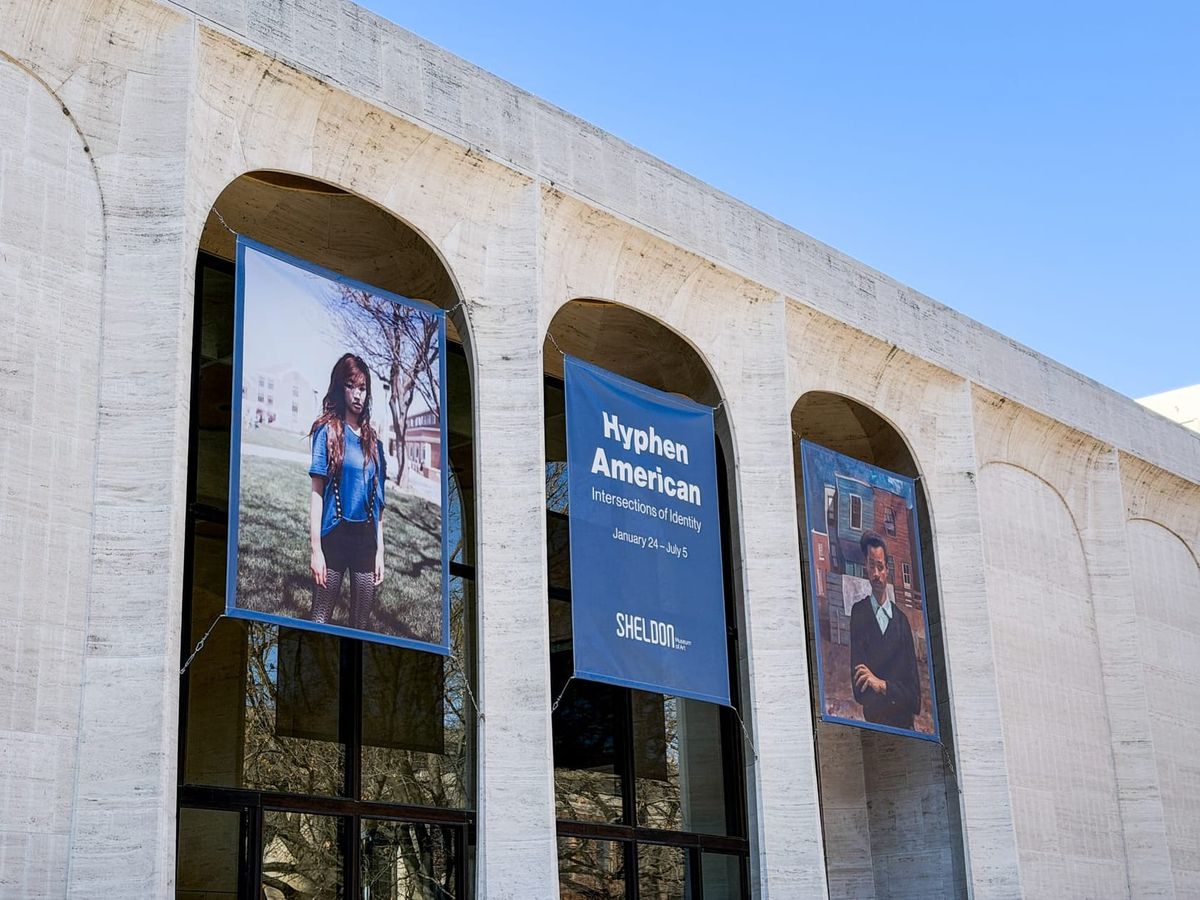
If you liked this piece, you might check out this other thing I wrote back in February. It's partly a review of a previous Sheldon exhibit and partly a reflection on the contradictions inherent to being an American. I had fun with it:
 Tynan Stewart
A little excerpt:
I'm not exactly eager to celebrate America's upcoming semiquincentennial. My sense of national pride has never been strong. It's hard to be patriotic and still have a functioning conscience at the best of times; and it's much harder now, during the Really Bad Times we're suffering through. I don't hate the United States. But I can't love it unconditionally; we've done too much harm, at home and abroad, for me to speak the phrase "I'm an American" without a concurrent feeling of shame.
So it was gratifying to walk into the Sheldon Museum's new exhibition — an exploration of American identity in the country's 250th year — and come face-to-face with a stark rejection of America's history of colonial brutality and imperial aggression.
Please consider signing up for a paid subscription to help support my coverage of local arts and culture:
You can also support me on Patreon (and receive a complimentary paid subscription to the newsletter by doing so) or leave a one-time tip. A big thank-you to everyone who already contributes!
If you have an event you'd like me to consider for next week's event roundup, you can submit it here. You can also send news tips, feedback, suggestions, compliments, criticism and ideas for things I should write about to tynanstewart@proton.me (or just reply directly to this email).
Thanks for reading.
~ Ty
P.S. Here's a cool video about the process that went into putting together the "New Horizons" exhibit, which grew out of a photography class at UNL: