This new exhibit rejects the idea of America as a 'melting pot'
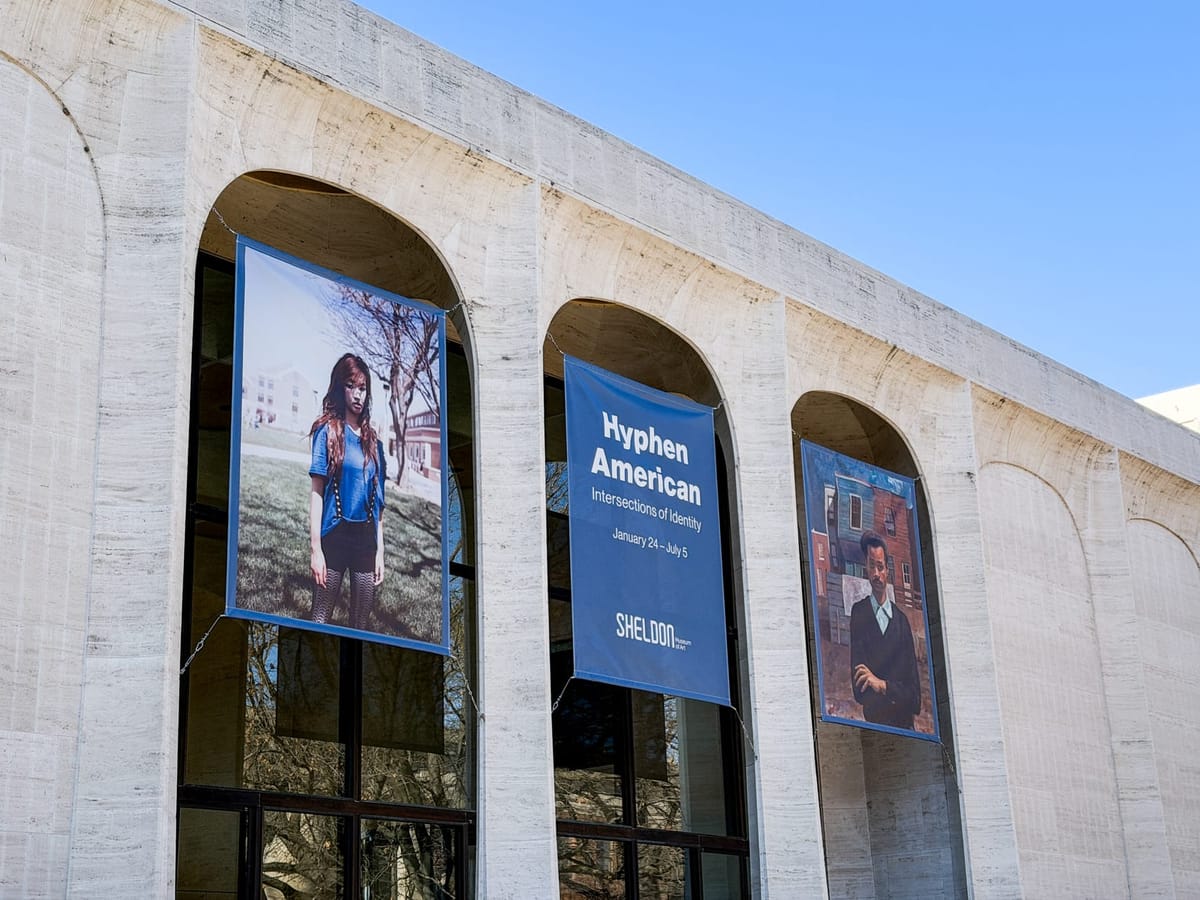
The Sheldon Museum's "Hyphen American" is an unapologetic tribute to the country's cultural diversity.

Hi,
I'm not exactly eager to celebrate America's upcoming semiquincentennial. My sense of national pride has never been strong. It's hard to be patriotic and still have a functioning conscience at the best of times; and it's much harder now, during the Really Bad Times we're suffering through. I don't hate the United States. But I can't love it unconditionally; we've done too much harm, at home and abroad, for me to speak the phrase "I'm an American" without a concurrent feeling of shame.
So it was gratifying to walk into the Sheldon Museum's new exhibition — an exploration of American identity in the country's 250th year — and come face-to-face with a stark rejection of America's history of colonial brutality and imperial aggression.
And I do mean face-to-face:
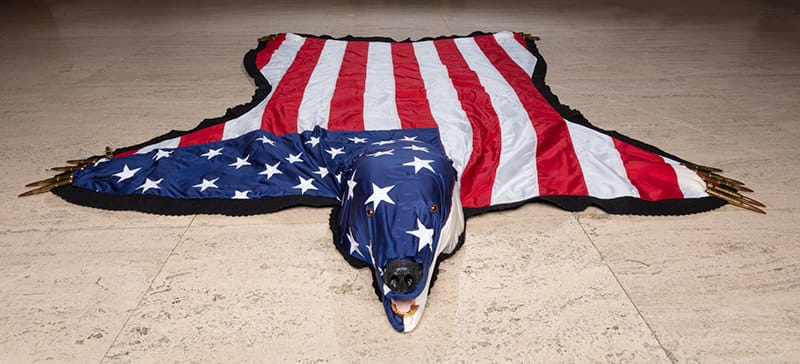
Indigenous artist Nicholas Galanin's piece, "The American Dream is Alie and Well" (the misspelling is deliberate), re-appropriates an American flag, reshaping the fabric into the form of a splayed polar bear skin with golden .50 caliber bullets for claws. It's an image of American identity as a trophy of conquest that depicts us as a rapacious, self-destructive nation — both aggressors who displaced and murdered the native peoples, and also victims of our own violent history, trapped by our delusion that the American Dream means anything at all.
But Galanin's work, while physically and symbolically central to the Sheldon's exhibition, is merely one part of a larger whole.
Hyphen American: Intersections of Identity is more than a commentary on the ugly sides of U.S. history. It's also a reflection on the irreducible complexity of American identity. It explores the fact that "Americanness" — whatever that might mean — is not and can never be monolithic.
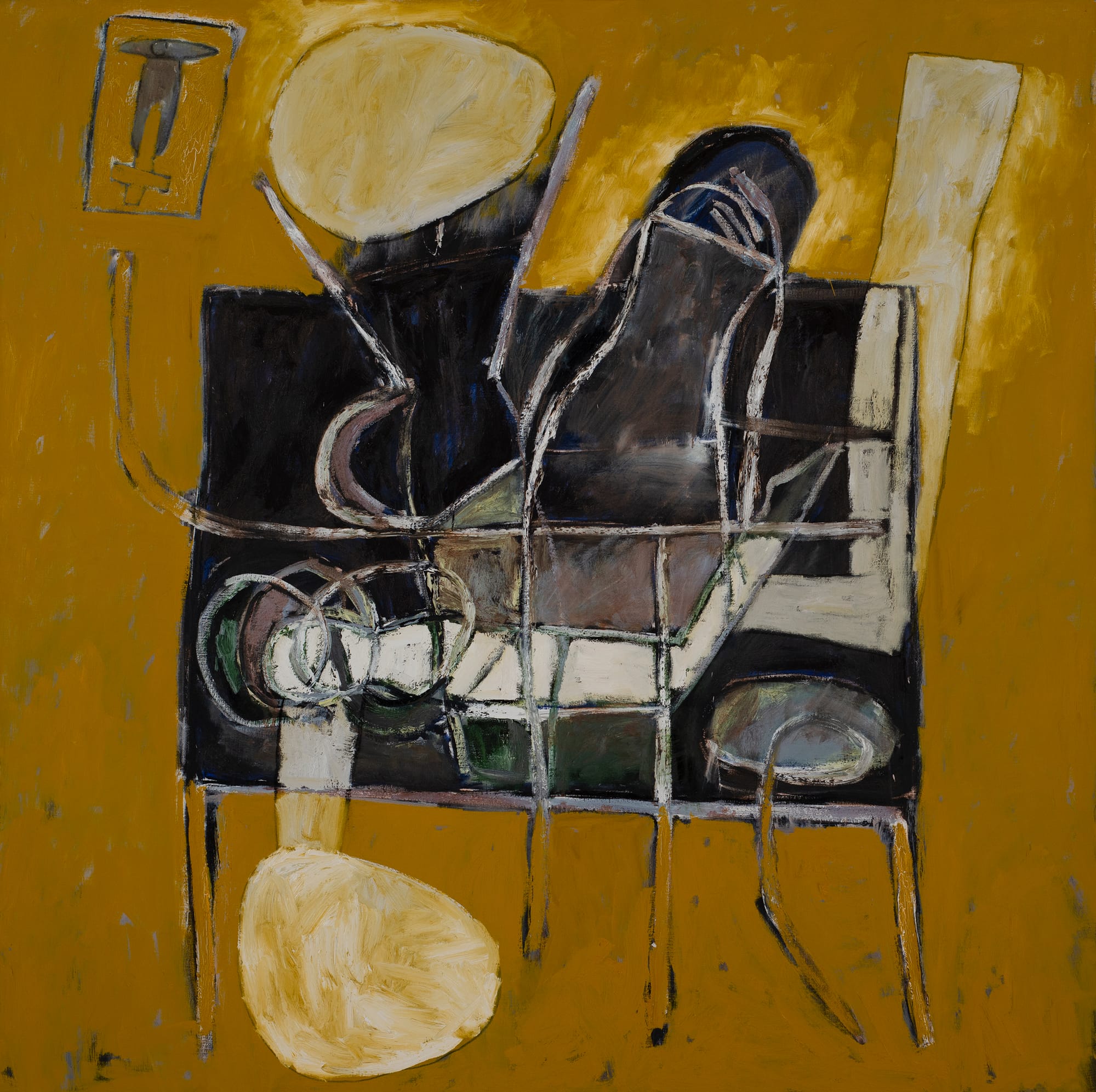

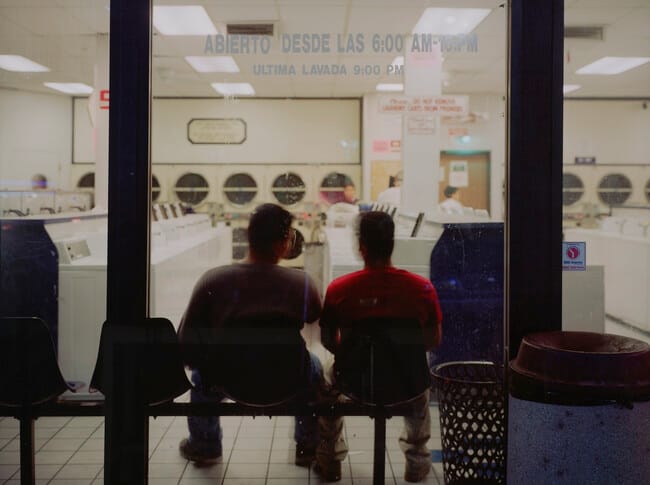
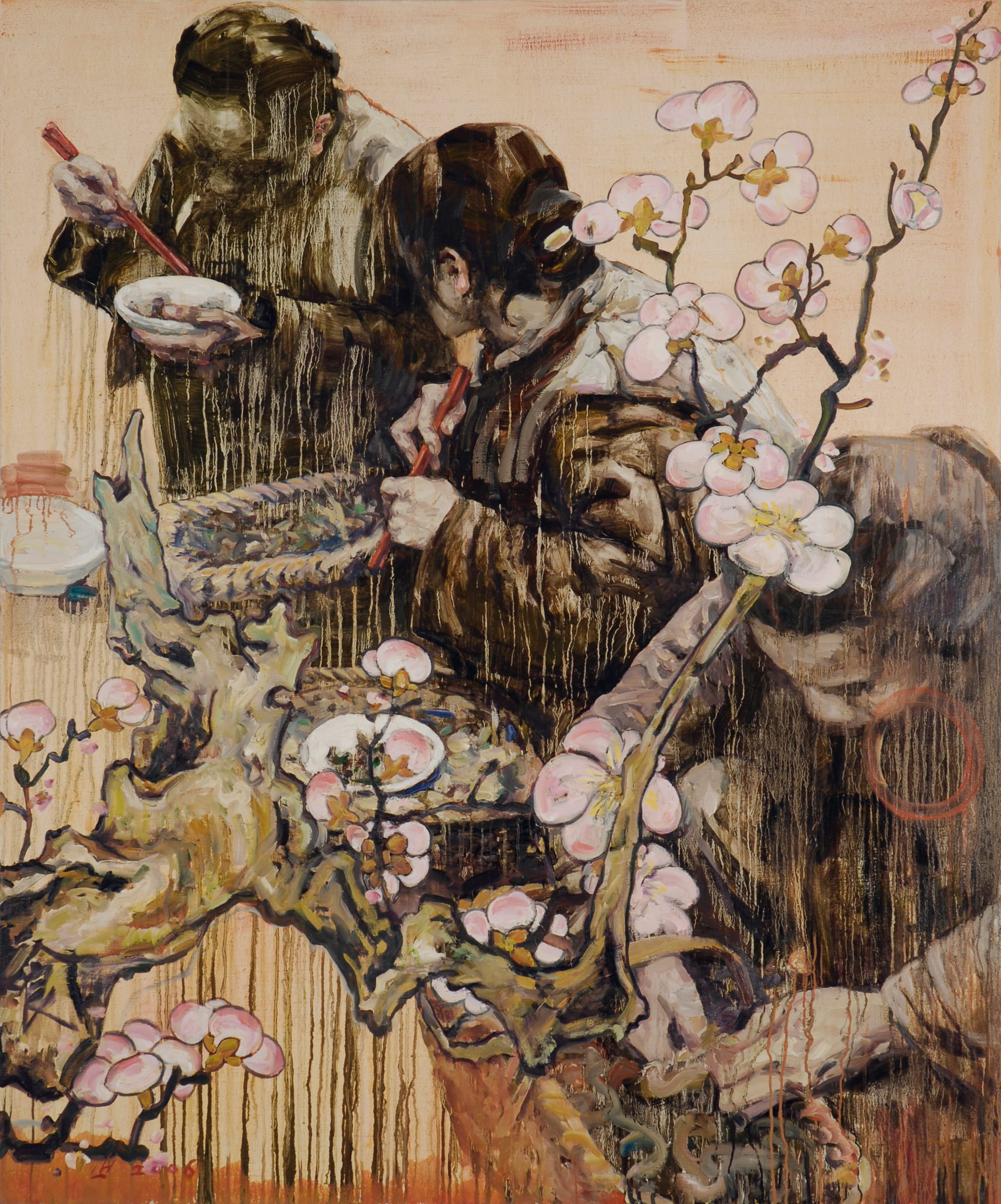
In an essay that accompanies the exhibit, curator Christian Wurst explains that Hyphen American is a challenge to the longstanding and widespread perception that America is a "melting pot," an image of national identity that demands assimilation and unity. Instead, Wurst wants us to reflect on the sheer, inexhaustible variety of histories, backgrounds, and experiences that can still be considered "American."
He writes:
In the early twentieth century, scholar Horace Kallen argued against the idea of the United States as a "melting pot," where people of different backgrounds assimilate in to the predominant Anglo-Saxon American identity. Instead, he coined the term "cultural pluralism," meaning that different groups living the US retain their traditions and contribute to the greater American social fabric. Another way to view cultural pluralism is through the concept of "hyphenated identities," which Kallen describes as, "a chorus of many voices each singing a rather different tune." This term refers to the multiple cultural, ethnic and national backgrounds one might use to describe their identity such as African American, Mexican American, Jewish American, Asian American, and Arab American. Rather than seeing hyphenated identities as a sign of incomplete Americanness, Kalen argues that they are precisely what makes someone fully American.
This has particular relevance for Lincoln, which prides itself on being open and welcoming to migrants and refugees. In fact, one of the coolest things about the exhibit, to my mind, is the effort Wurst put into making Hyphen American feel grounded in this city. For one thing, the exhibit is presented in four different languages: English, but also Spanish, Vietnamese and Arabic, the four most commonly spoken languages in Lincoln.
This extends to the exhibit catalogue (where Wurst's introductory essay appears), which was printed in three bilingual versions. The catalogue also includes responses to specific artworks penned by local community members who collaborated with the Sheldon to plan community outreach and engagement — an attempt to break down the barriers that sometimes keep people from feeling welcome in museum spaces.
Some of the exhibit's most striking images also have a concrete connection to the city. These include photographs by artist Binh Danh, who has chronicled the experiences of Lincoln's Vietnamese community, many of whom were originally displaced by the Vietnam War (yet another reminder of the way U.S. imperialism has shaped what it means to be an American).
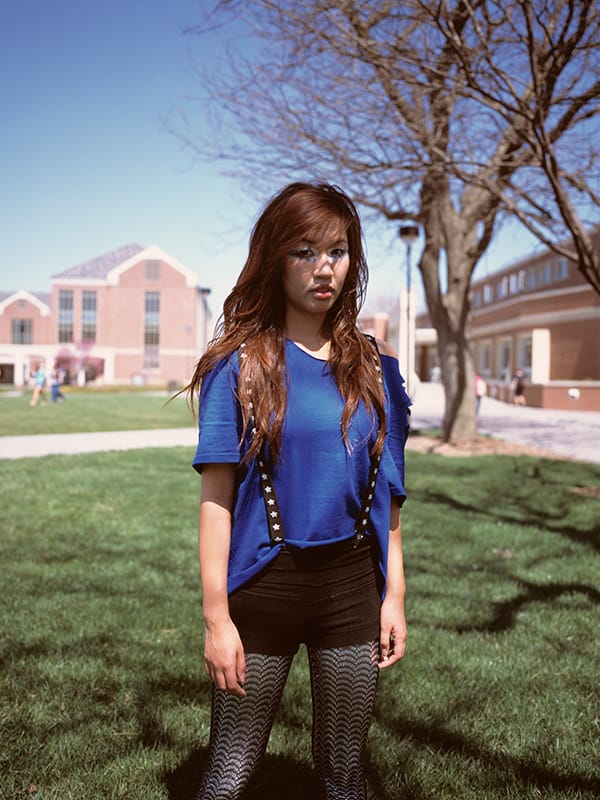
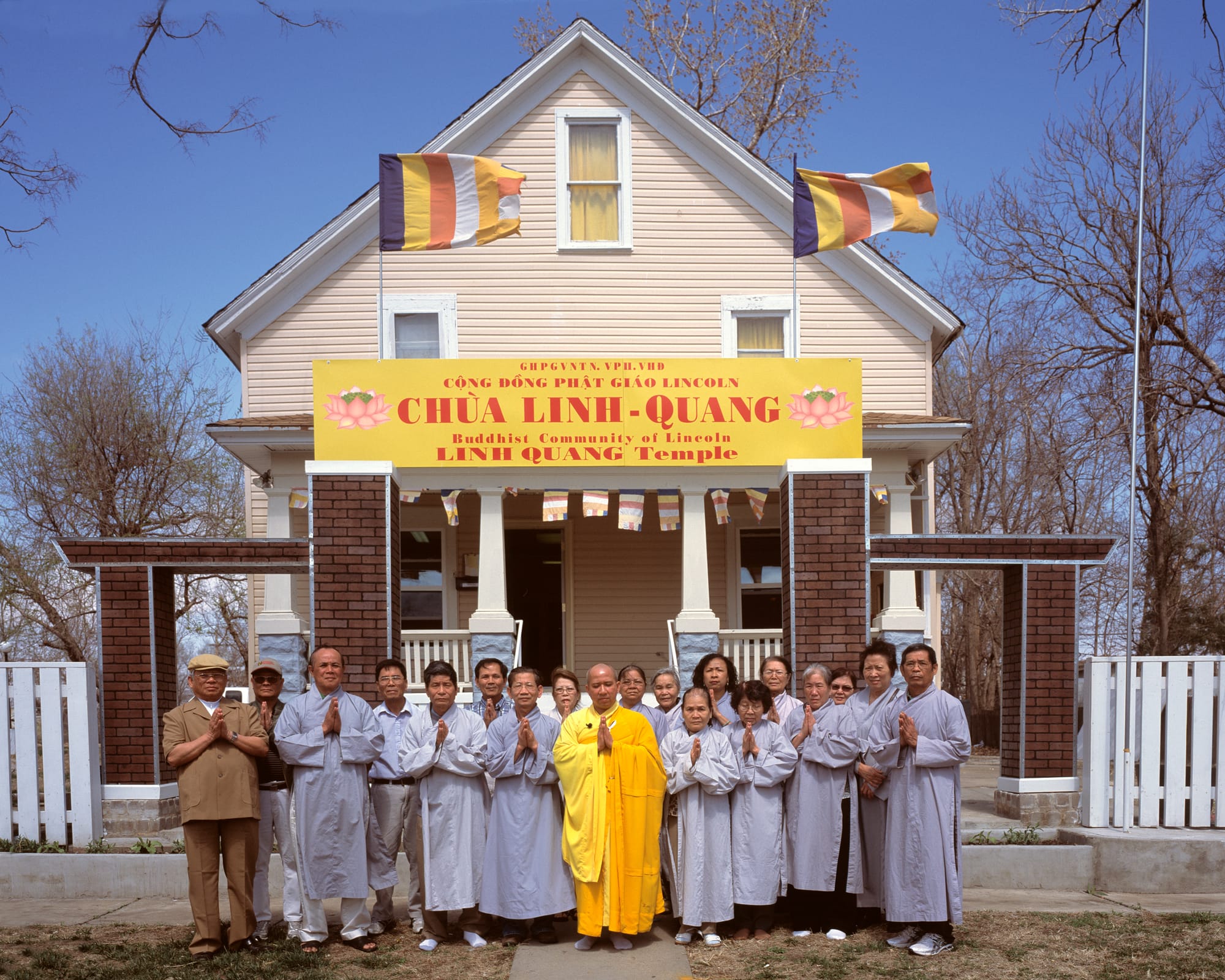
It's not a stretch to say that Hyphen American is an unapologetic tribute to Lincoln's — and America's — cultural diversity. And while the exhibit is marketed as the museum's contribution to the country's semiquincentennial celebration, I couldn't help but think, as I wandered through the galleries, that it also represents an implicit rejection of our current political moment. (As you might recall, the Trump administration soft-launched the country's official 250th anniversary festivities with an authoritarian-coded military parade.)
Wurst began working on the exhibit three years ago, so I think it'd be wrong to call it a direct response to, say, the federal government's barbaric treatment of immigrants or its unrelenting assault on diversity, equity and inclusion. I asked Wurst about this directly, during a press preview back in January, and his answer struck me as diplomatic but thoughtful:
When you do an exhibition that is about American art, it's always going to have a conversation with the current climate. And we are obviously aware of that. We don't live in a bubble. The show was not conceived in a bubble. ... I think overall it's still a celebration — and maybe a reminder of who we are.
Ultimately, I think the exhibit's greatest selling point is that it resists a simple answer to this question of "who we are" precisely because "who we are" is unfixed. It reminds us that violence and beauty, idealism and exploitation are all mixed together, not in a melting pot that erases difference, but in a shifting kaleidoscope that defies easy understanding. And no one — not you, not me, and certainly not the fascists currently in power — can dictate what it really means to be an American.
Hyphen American: Intersections of Identity is on display at the Sheldon Museum of Art until July 5, 2026. Admission is free. In addition, Binh Danh will be in Lincoln on March 26 to talk more about his 2011 exhibition Viet Nam, Nebraska, as part of the Hixson-Lied Visiting Artist series.
A reminder: If you have an event you want to see featured in next week's event roundup, you can submit it here. You can also send news tips, feedback, suggestions, compliments, criticism and ideas for things I should write about to tynanstewart@proton.me
Thanks for reading.
~ Ty