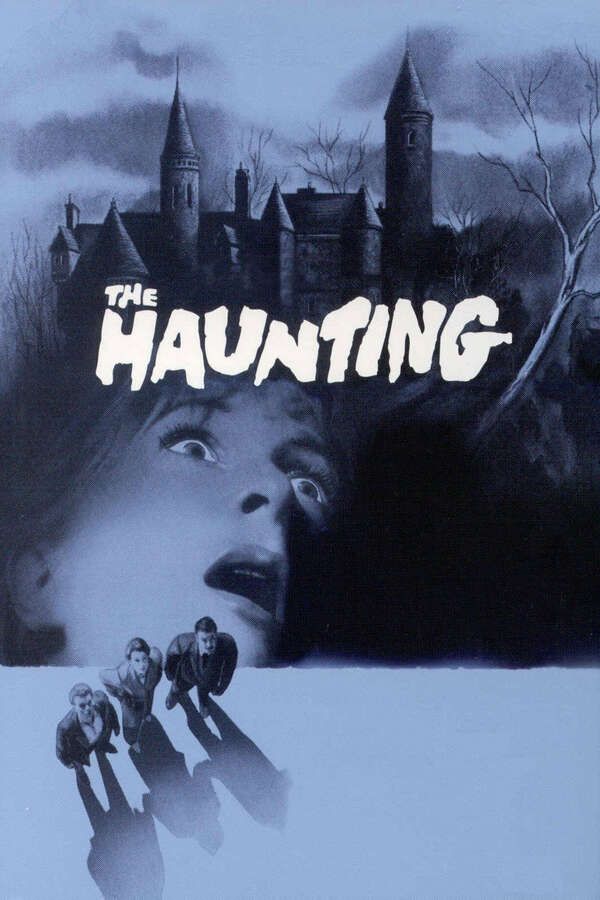
The Haunting
Is that a ghost? Or just your unresolved psychological trauma?

Hi,
This is part of my ongoing Fright Fest 2026 coverage. You can find all my previous reviews here and the full list of upcoming films here.
Also a reminder that my curated list of events happening this weekend in Lincoln goes out tomorrow morning at 11 am. If you've got cool stuff going on (or know about cool stuff going on), tell me about it.
I wanted to say a huge thank-you to my paid subscribers and folks who've donated to support This Week In Lincoln. Recently I've been devoting a lot of time and effort to making the newsletter better, largely because I've got people like you willing to financially support my work.
If you're currently a free subscriber, I still love you but please consider paying for what you read: It's just $5 a month or $50 for a year. You'll get access to a subscriber-exclusive column and the comforting knowledge that you're funding independent coverage of Lincoln. You can also support me on Patreon or leave a one-time tip.
Okay here are some thoughts on The Haunting:
- I've never watched much vintage horror, mostly because I didn't really watch any horror films until a few years ago. So I don't know if I really have the tools or depth of knowledge to articulate anything insightful about a film like The Haunting (1963). But I'll do my best because I enjoyed it quite a bit.
- I was struck by the fact that we are never actually shown the ghost who (presumably) inhabits the disorienting New England mansion known as Hill House. Jaws gets a lot of credit for the way it largely hides its monster from the audience, thus capitalizing on people's instinctive fear of dangers they can't see; but rather famously, the shark got minimal screen time because the film crew's mechanical props kept breaking down (otherwise we probably would've gotten way more shots of a not-very-terrifying animatronic). By contrast Robert Wise, director of The Haunting, seems to intuitively understand that actually seeing a ghost would undermine his film's carefully escalating sense of tension and atmosphere of unease. I've never read the Shirley Jackson novel the film is based on, so maybe this is also a feature of the original story. Regardless, it was a good choice.
- Not showing a ghost also allows the movie to dwell in the ambiguity of the whole scenario. Is there actually a spirit haunting Hill House? Or are the weird, insidious events of the film a manifestation of Nell's fragile psyche? Is she actually being pursued by the vengeful ghost of Abigail Crain, who was left to die by an inattentive caregiver? Or is Nell simply haunted by the memory of her dead mother, whose illness consumed 11 years of Nell's life?
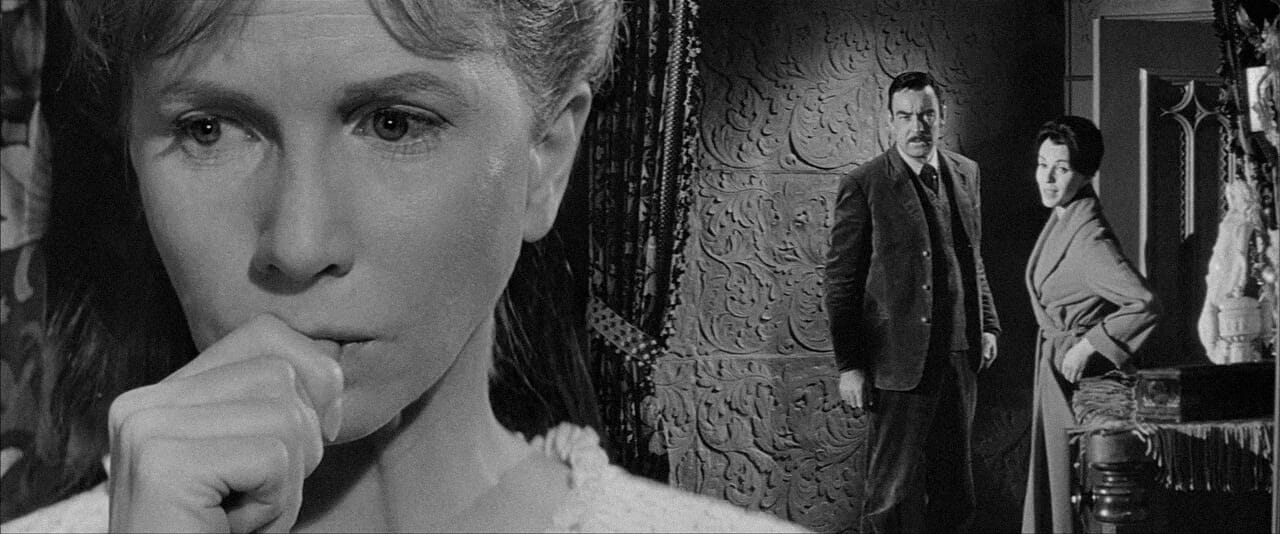
- The answer is probably a combination of both: The house is evil but it's never going to provide proof that would hold up to a scientific inquiry. Instead, it preys on people who are psychologically vulnerable. Nell says repeatedly that the house "wants" her. And maybe it's true, but it's also a statement indistinguishable from delusional paranoia. As John Markway, the anthropologist and paranormal researcher, tells her: "You realize, don't you, that if even one event is proved to be an hallucination, then this whole experiment will be questioned."
- The film's original tagline — "You may not believe in ghosts but you cannot deny terror" — is incredibly fitting. Whether or not one "believes" in the objective reality of supernatural happenings is largely irrelevant, which is what Dr. Markway doesn't seem to understand. It doesn't matter if Nell's experiences are "hallucinatory" because her fear is causing real damage. The ghost of Hill House might or not be real. But how you feel about the prospect of a haunted house most definitely is.
- In the world of The Haunting, an encounter with the paranormal is a psychological experience, a way of explaining and processing terror or trauma or repression. For Nell, it's about dealing with her failure (at least in her own mind) as her mother's caregiver and the attendant feelings of guilt and shame. For Theo, it's about the social constraints placed on her obvious (but entirely implicit) queerness. For Luke, it's about . . . I dunno, being a rich alcoholic with no purpose in life? (Still working on that one.)
- Fright level: 3/10
- Enjoyment level: 8/10
Up Next
Wednesday, October 14
Film: Eyes Without a Face (1960)
+ When: 5:30 pm
+ Where: Ross Media Arts Center, 313 N 13th St. (Google Maps)
+ Cost: $10 | $5 for members | $5 for UNL students
More details: "Dr. Génessier is riddled with guilt after an accident that he caused disfigures the face of his daughter, the once beautiful Christiane, who outsiders believe is dead. Dr. Génessier, along with accomplice and laboratory assistant Louise, kidnaps young women and brings them to the Génessier mansion. After rendering his victims unconscious, Dr. Génessier removes their faces and attempts to graft them on to Christiane’s."
Wednesday, October 14
Film: Psycho (1960)
+ When: 7:30 pm
+ Where: Ross Media Arts Center, 313 N 13th St. (Google Maps)
+ Cost: $10 | $5 for members | $5 for UNL students
More details: "When larcenous real estate clerk Marion Crane goes on the lam with a wad of cash and hopes of starting a new life, she ends up at the notorious Bates Motel, where manager Norman Bates cares for his housebound mother."
Thursday, October 15
Film: The Shining (1980)
+ When: 6:30 pm
+ Where: Ross Media Arts Center, 313 N 13th St. (Google Maps)
+ Cost: $10 | $5 for members | $5 for UNL students
More details: "Jack Torrance accepts a caretaker job at the Overlook Hotel, where he, along with his wife Wendy and their son Danny, must live isolated from the rest of the world for the winter. But they aren’t prepared for the madness that lurks within."