A beautiful, uncomfortable film about Iraq
Now Playing: The President's Cake
Hi,
There are two films currently showing at the Ross: Billy Preston: That's The Way God Planned It, a documentary about the singer and keyboardist, and The President's Cake, an Iraqi film about life under Saddam Hussein's rule in the 1990s.
I saw the latter on Friday and reviewed it below. It's definitely worth your time, though as you'll see I found it to be a difficult viewing experience (in a good way).
Here's everything else that's coming soon:
- A five-film limited series showcasing the work of Omaha-born director Joan Micklin Silver. The Ross will screen one of her films every day from Wednesday, April 8 to Sunday, April 12.
- Fantasy Life, which opens Friday, April 10.
- Resurrection, a one-night only screening on Wednesday, April 15.
- Immediate Family, which opens Friday, April 17.
- Mr Nobody Against Putin, the Oscar-winning documentary, which opens Friday, April 17.
- Challengers, a one-night free screening on Tuesday, April 21, presented by the UNL Film Club.
- I Swear, which opens Friday, April 24.
Now Playing: The President's Cake
The President's Cake is an unsettling and challenging watch.
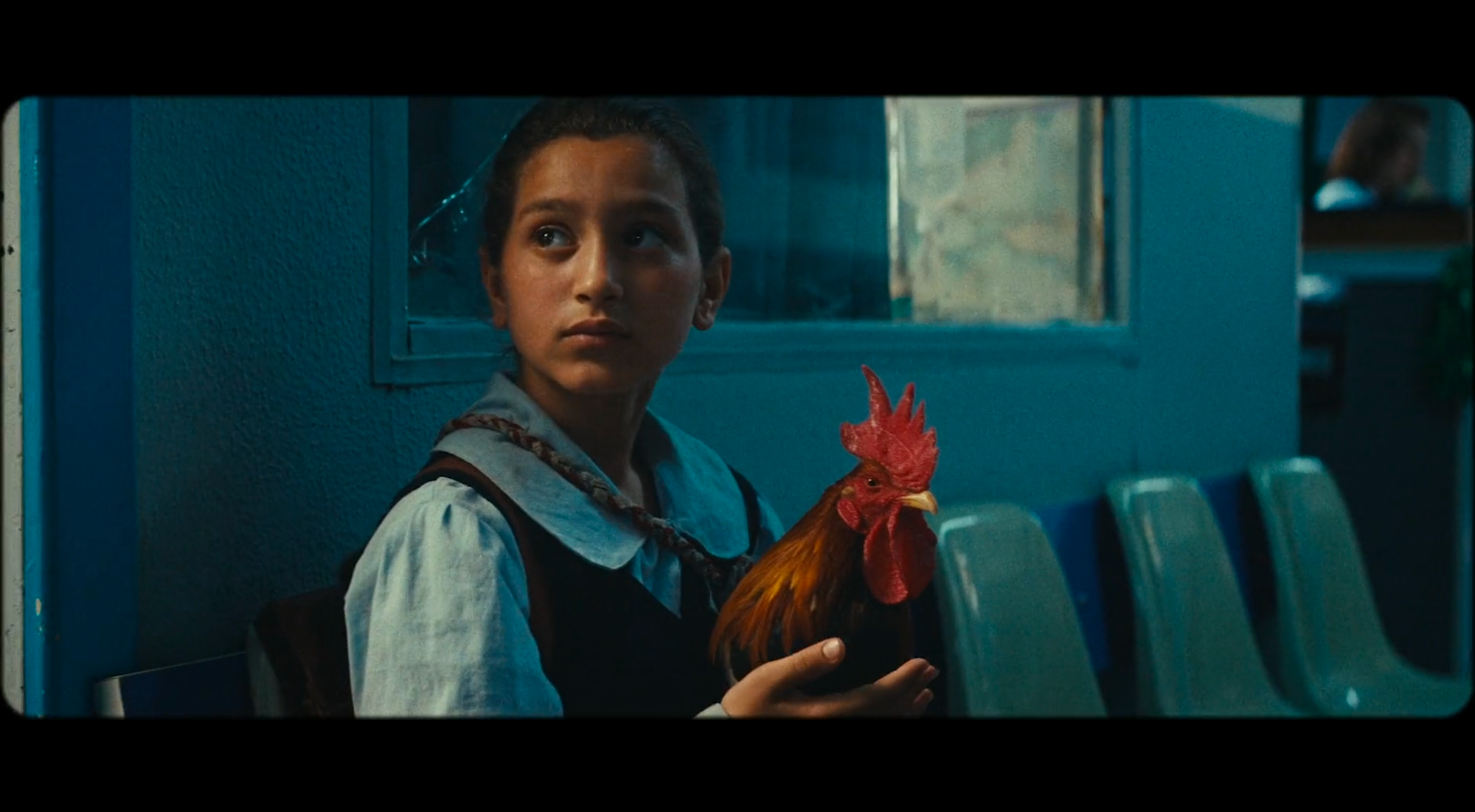
To be clear, this has nothing to do with how the film looks. It is meticulously staged and beautifully shot, with the texture and realism of a documentary (though it's entirely fictional). It also features some of the best cinematic use of color I've seen in a long time. Much of the film is washed with a cold blue tint, reflecting the harsh world that the film's protagonist, a nine-year-old girl named Lamia (played by novice actor Banin Ahmad Nayef), is forced to survive. But there are scattered moments of quiet and peace — almost always featuring Lamia and her grandmother, seemingly her only living relative — where the blue temporarily recedes and warmer colors dominate, a reminder that even in an authoritarian society overwhelmed by poverty, people can still find love and joy.
So why did The President's Cake make me feel so uncomfortable? It comes down to the question of who the film blames for the immiseration of Iraq.
The story takes place in the early 1990s, around the time of the Gulf War. UN-imposed economic sanctions have caused severe scarcity and decimated people's ability to find essential resources; the opening scene features families lining up to receive a water ration. ("Only one jerry can. Only one," a government official barks.) Yet Lamia is still forced by her cruel, regime-worshiping teacher at school to make a cake for then-president Saddam Hussein's birthday.[1] The film follows her from her home in the rural Mesopotamian Marshes to the chaos of a big city — seemingly Baghdad — in pursuit of ingredients like sugar, which have become an unaffordable luxury.
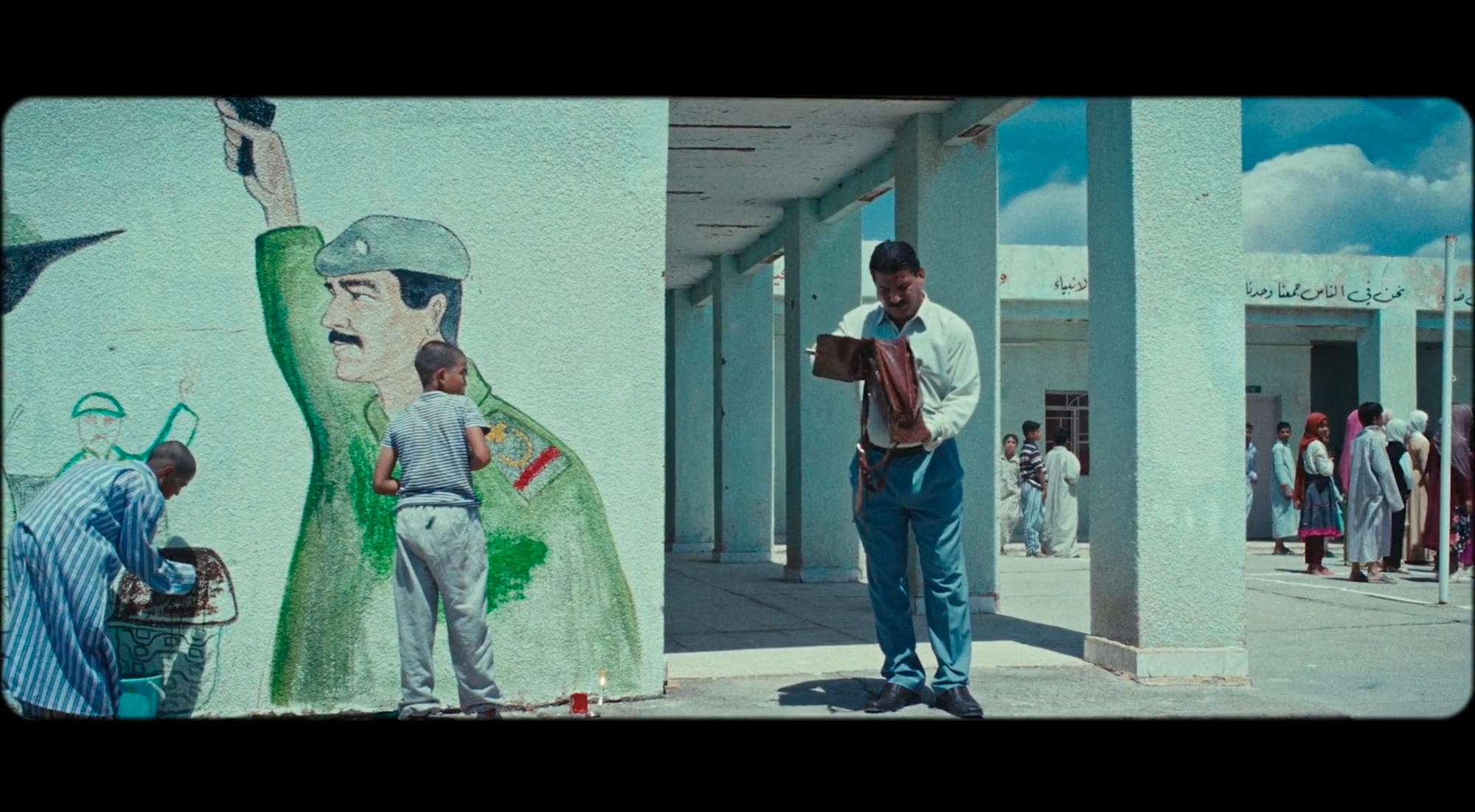
Saddam is an inescapable presence in The President's Cake. The Ba'athist ruler is the driving force behind the narrative, and symbols of his power are everywhere, from a mural drawn by school children to the many official-looking portraits that adorn police stations and grocery stories. But practically every institution that Lamia encounters — the military, the cops, a city hospital — seems to be rotting from the inside; yes, people are resource-starved because of the sanctions, but corruption and moral decay are also omnipresent, a fact the film emphasizes almost to the point of absurdity. (I lost count of the number of bribes shown on screen.) Lamia and her friend Saeed (played by Sajad Mohamad Qasem), who has been tasked with finding fruit for Saddam's birthday, encounter a scant few adults who show them anything resembling kindness. Most are indifferent or actively predatory. Thus the constant visual reminders of Saddam are meant to show us precisely where the fault lies: His narcissistic self-absorption and brutal authoritarian policies are the problem.
By contrast, the influence of the United States is pushed to the background. There are nods to an ongoing conflict with America; Lamia encounters several wounded soldiers and a pro-Saddam parade where someone is burning an effigy of Bush the elder. The film is aware of America's impact on the Iraqi people, but we — and I'm speaking for American audiences here — are not the priority. This a story that positions Iraqis as the main characters, rather than bit players in a drama about American military and economic power. As critic Ali El-Sadany argues: The film "sees Iraq as truly Iraqi instead of a backdrop for other people’s wars or moral reckonings."
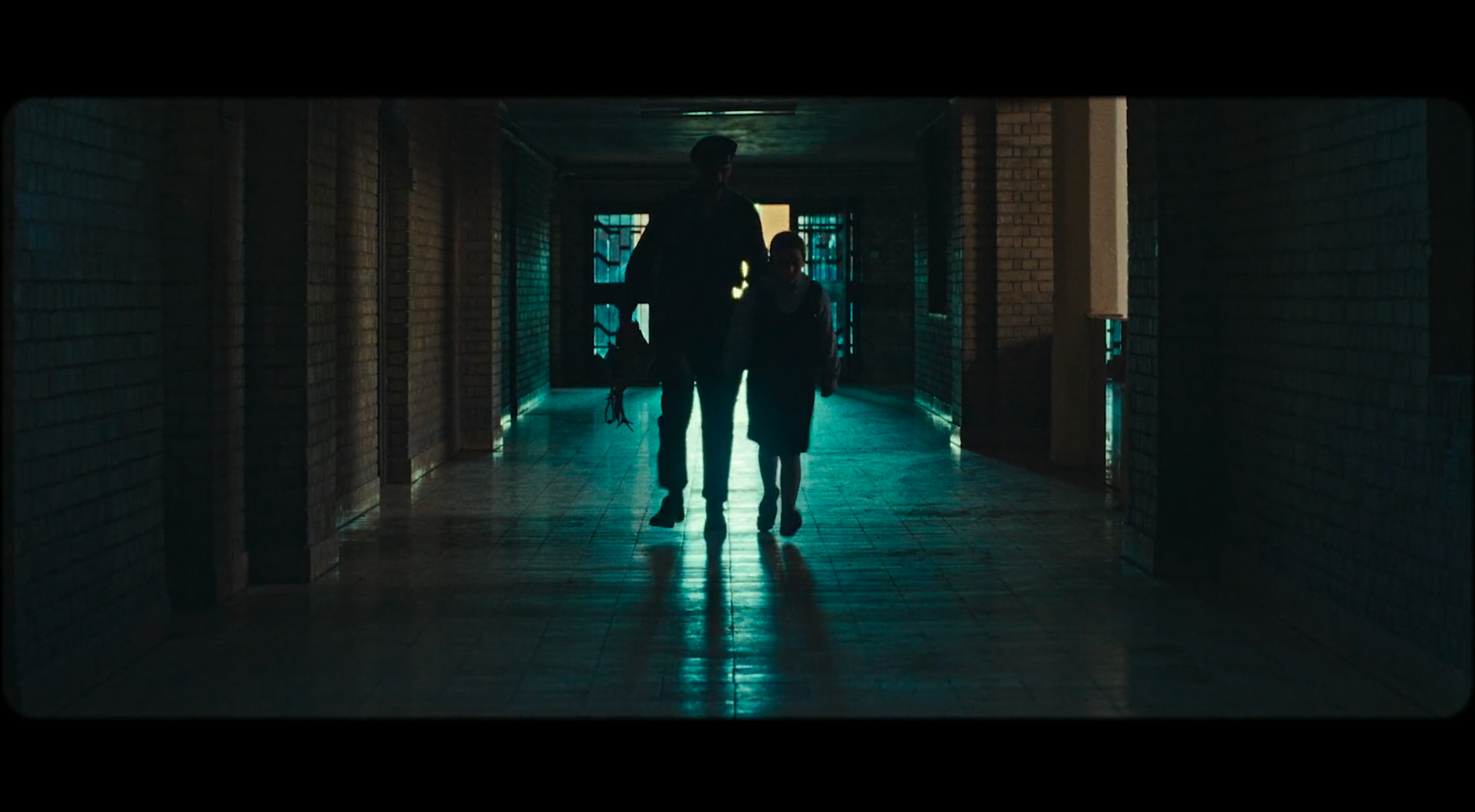
So much of post-9/11 popular culture, including mainstream cinema, glamorizes the American military and sanitizes our violence against the Middle East, and I desperately want to see more art where the U.S. is portrayed as something other than the good guys. But The President's Cake made me realize that this desire is, perhaps, just another way of reinforcing American exceptionalism. Even the best anti-Iraq War art — something like HBO's Generation Kill comes to mind — inevitably positions Americans as the priority, as the primary thing we should be thinking and talking about, while continuing to marginalize the people we've harmed.
The President's Cake does something more radical than simply portraying America as the bad guys: It marginalizes us instead. It pushes us off screen and proclaims that, actually, when it comes to representing Iraq, it's the Iraqi people — the good and the bad; the cruel and the kind; the innocent and the corrupt — who matter most.
The exact year is, perhaps deliberately, left unclear. In fact, the story seems to take place in a slightly fictionalized timeline, one in which Saddam Hussein's birthday (April 28) coincides with an active military conflict between the U.S. and Iraq. This wouldn't have been the case during the actual Gulf War, which lasted from August 1990 to February 1991. ↩︎
Got an event you want to see featured in next week's event roundup? Submit it here. You can also send feedback, suggestions, compliments, criticism and ideas for things I should write about to tynanstewart@proton.me
Please share the newsletter with your friends! Word of mouth and your recommendation really helps this thing grow.
I'm also on Letterboxd, Instagram and Bluesky so follow me there or whatever.
~ Ty