Even Shakespeare couldn't save this script
Now Playing: Mr. Burton

Hi,
I'm back with another film review!
There are two movies currently playing at the Ross: Mr. Burton, which I didn't like very much, and The Christophers, which I enjoyed quite a bit. I've reviewed Mr. Burton below, and I'm hoping to write something about The Christophers, a fascinating exploration of what it means to be an artist that features an stunningly grumpy performance from international treasure Ian McKellen, before it leaves the theater. (It's definitely worth seeing!)
Here's everything else that's coming soon to the Ross:
- Love From Ground Zero, a one-night screening on Wednesday, June 3.
- Lewerentz Divine Darkness, which opens Friday, June 5.
- The Wizard of Oz, a one-day free screening on Saturday, June 6.
- Aanikoobijigan [Ancestor / Great-Grandparent / Great-Grandchild], a one-night free screening on Monday, June 8.
- Elizabethtown, a one-night screening on Wednesday, June 10.
- Esta Isla, which opens Friday, June 12.
- Tuner, which opens Friday, June 12.
Also, a reminder that your recommendation really helps this newsletter grow. Please tell your friends about This Week In Lincoln!
Now Playing: Mr. Burton
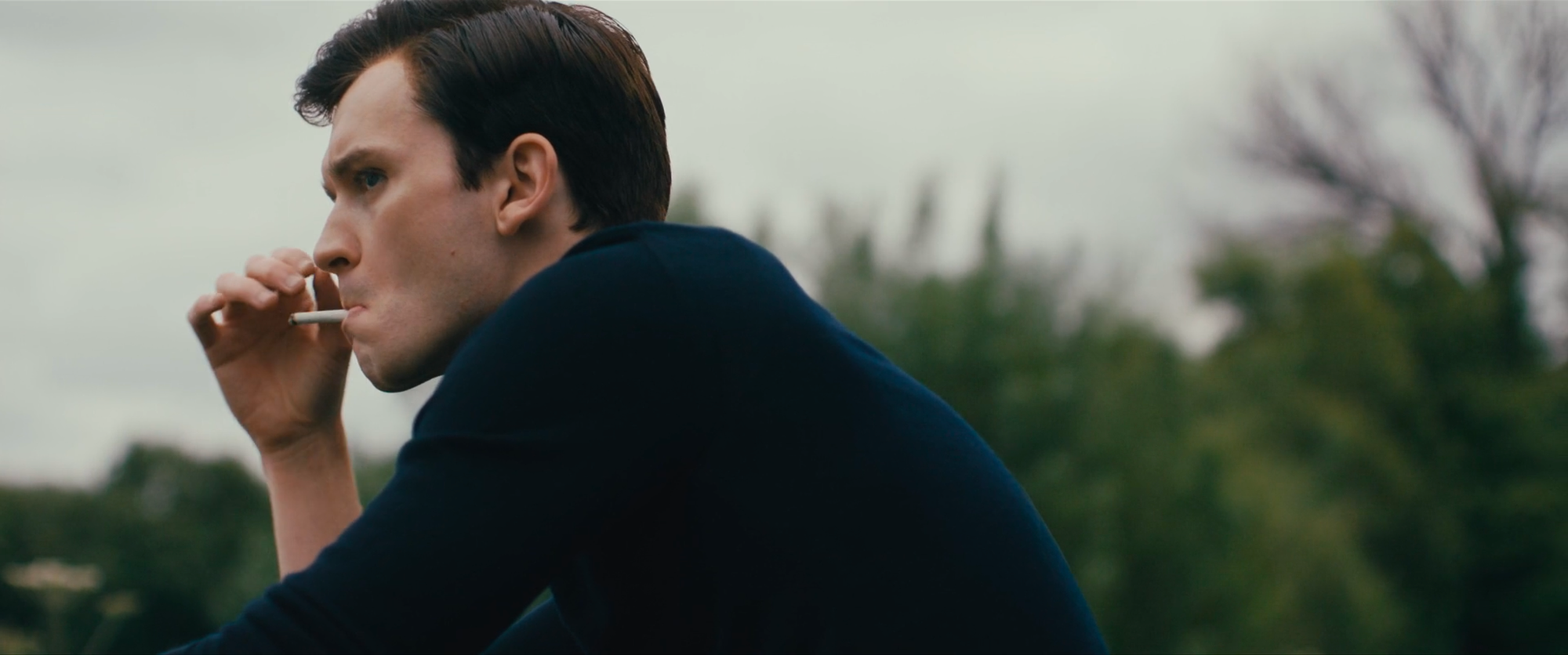
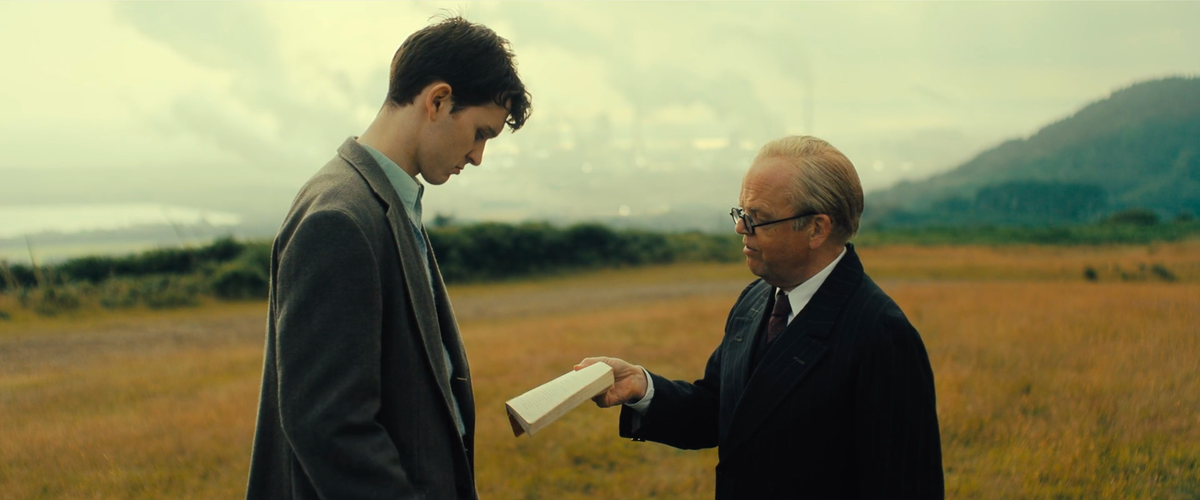
Mr. Burton, a mostly forgettable biopic about the early life and career of twentieth-century Welsh actor Richard Burton, has a few good lines of dialogue. But I can't really give the film credit: All of them were written by William Shakespeare.
It's not surprising that a movie about Burton, who was known as much for his stage portrayals of Hamlet and Prince Hal as his Hollywood films, would crib so much from the Bard. It's probably one of the best decisions the film could make, as many of Mr. Burton's most interesting scenes feature actor Harry Lawtey (who plays Richard) rehearsing or performing lines from Shakespeare's plays with varying degrees of polish.
Yet the film is ultimately less about Richard Burton, the legendary actor — scenes of his mature performances occupy a scant handful of minutes near the end of the film's 2-hour runtime — and more about Richie Jenkins, the awkward, gangly son of a drunken Welsh miner. That the film works at all is due to Lawtey's ability to convincingly portray a naive young man whose acting talent is apparent but not yet developed, a feat that ironically takes a good deal of well-developed acting talent to pull off; Lawtey's complete transformation from a neophyte who yells his lines when he should whisper them into an arrogant but restrained stage presence is genuinely compelling to watch.
Still without a timely intervention from a teacher, it seems unlikely that Richie Jenkins would have ever become the Richard Burton that history remembers. In fact, I've actually buried the lede a bit because the "Mr. Burton" of the title refers to an entirely different character: Richard's mentor and eventual legal guardian, Philip Burton (played in the film by Toby Jones). The narrative positions Philip as the driving force behind the actor's later success, a thesis summed up by a quote from Hollywood mega-star Elizabeth Taylor (who had her own famously turbulent relationship with Richard) that opens the film:
Without Philip Burton there would never have been a Richard Burton. That great rolling voice that cracked like wild Atlantic waves would never have been heard outside the valley.
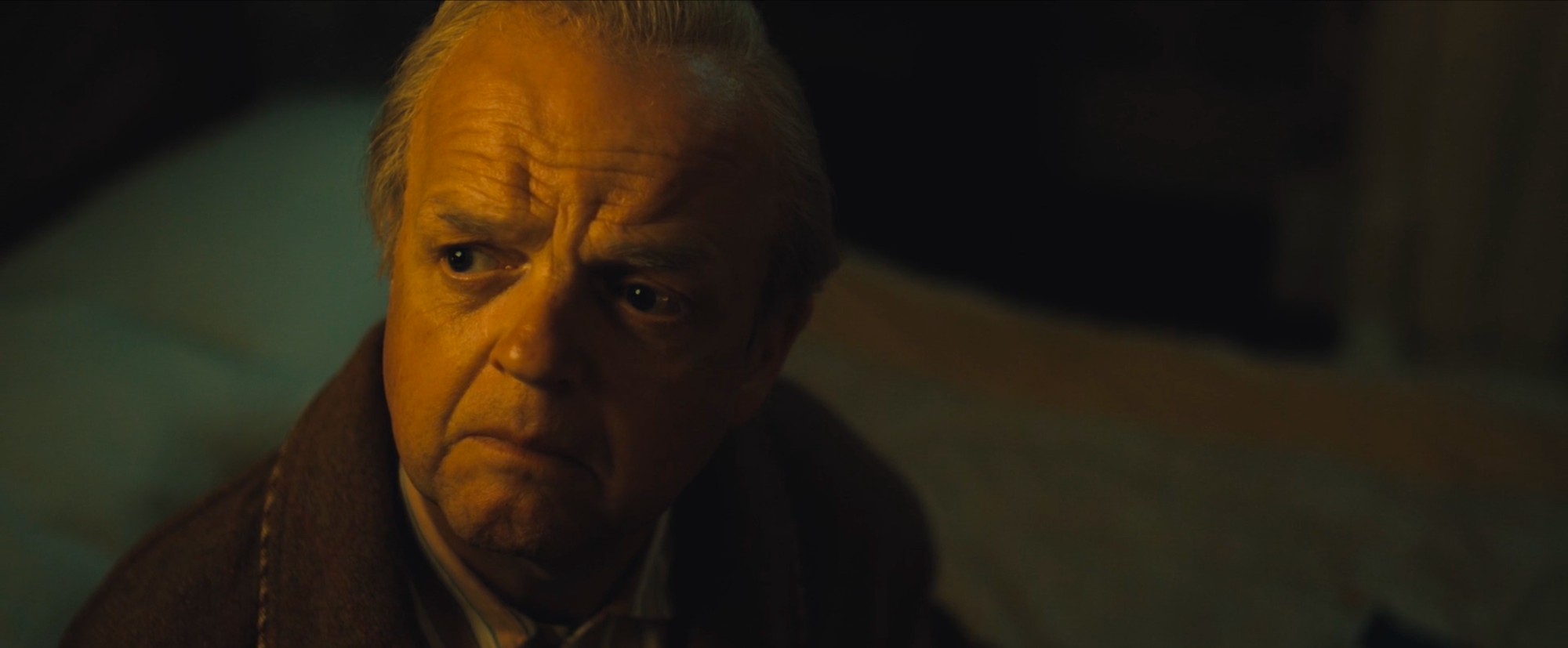
Philip, a frustrated playwright and English teacher, is the first to notice Richard's potential — or perhaps more accurately, his passion. Despite his initial preference for rugby over academics, Richard finds himself emotionally and intellectually moved by the "muse of fire" prologue from Henry V after Philip assigns the passage as punishment for a minor classroom infraction. Richard memorizes the speech and mumbles through his delivery before a slightly exasperated Philip cuts him off after only a few lines. But Richard remarks that learning Shakespeare was "not much of a punishment" and, as Philip gives him a quizzical look, he clarifies: "I bloody loved it."
Philip is not impressed but he is intrigued. His own artistic dreams have been thwarted by circumstances (and seemingly the outbreak of World War II) but he is clearly compelled by Richard's incongruous desire to become an actor and offers to help him pursue that dream. The film chronicles a relationship that is, by turns, both compassionate and turbulent, nurturing and uncomfortable. Philip is perhaps not Richard's "muse of fire," but he does occupy an ambiguous space in the young man's life, one which transcends a simple student-teacher relationship. There is an entire subplot devoted to the possibility — one which has an uncertain historical veracity — that Philip had a romantic interest in Richard.
Unfortunately, what could've been an interesting story about the complexities of artistic mentorship and the power relations between students and teachers is betrayed by a leaden, heavy-handed script. Most of the narrative beats are predictable and cliche. (In one of the worst moments, Richard invites his drunken, distant father to his debut performance as an actor, but his dad misses the play and stumbles in — fully wasted — just after the curtain call.) Many of the film's themes are also spelled so explicitly that I started to wonder if I'd somehow stumbled into a Netflix production, where it's just assumed the audience will be half-watching while scrolling on their phones. While reading other reviews, I was bewildered by another writer's comment that "the film’s approach is feather-light."
I can only assume we were watching different movies.
Got an event you want to see featured in next week's event roundup? Submit it here. You can also send feedback, suggestions, compliments, criticism and ideas for things I should write about to tynanstewart@proton.me
I'm also on Letterboxd, Instagram and Bluesky so follow me there or whatever.
Thanks for reading!
~ Ty