Fjord: A film about religious persecution that feels shallow and contrived
Now playing at the Ross

Hi,
If you're new to the newsletter, welcome and thanks for being here. This post is part of an occasional series where I talk about films playing at the Ross Media Arts Center. There's also a schedule of upcoming films below my review.
Today, I've got a piece about Fjord, winner of the prestigious Palme d'Or at this year's Cannes Film Festival.
Unfortunately, I didn't like it very much. But more on that below!
I've got some big plans for 2027, most of which involve publishing more often and reporting longer, more ambitious pieces about Lincoln's music and culture scene. But that kind of work takes time and effort. I'm a freelance writer and I don't have another full-time job — writing is my full-time job! — so the money I get from readers helps to pay for my living expenses. Basically, every paying member is buying me more time to work on This Week In Lincoln.
My current goal is to add 12 more paid subscribers by the end of the year. Alternatively you can leave a one-time tip or support me on Patreon and receive a complimentary paid subscription to the newsletter. (I post about other, non-Lincoln related stuff on Patreon too so you'll get that as a bonus.) That said, I don't ever want folks to contribute if it'd be a financial burden, so if you want to help in other ways, share the newsletter with your friends! That also makes a big difference.
After today, I've only got one more review planned for the rest of the year: Bitter Christmas, the latest film from Spanish director Pedro Almodóvar, which opens at the Ross on Friday. It'll be the theater's last new release until January, according to their schedule.
~ Ty
P.S. If you see any of the films I write about, please share your thoughts. Only paid subscribers can comment below, but anyone can send me an email: tynanstewart@proton.me or just hit reply.
P.P.S. A quick plug for other, non-Lincoln stuff I'm working on: I wrote about the new four-hour Elon Musk documentary over on my personal website, and I'm making occasional videos on my YouTube channel, including this one about the 1976 film version of All the President's Men and its impact on the public perception of investigative journalism.
Now Playing: Fjord

Most of the time, I love watching films about things far outside my personal experience. That's one of the great joys of cinema, storytelling and art in general: It can expose you to things that will probably never happen in your life, a category that often includes things you explicitly hope will never happen in your life.
But occasionally, I come across a film where my lack of knowledge is a frustrating barrier. Fjord is one of those.
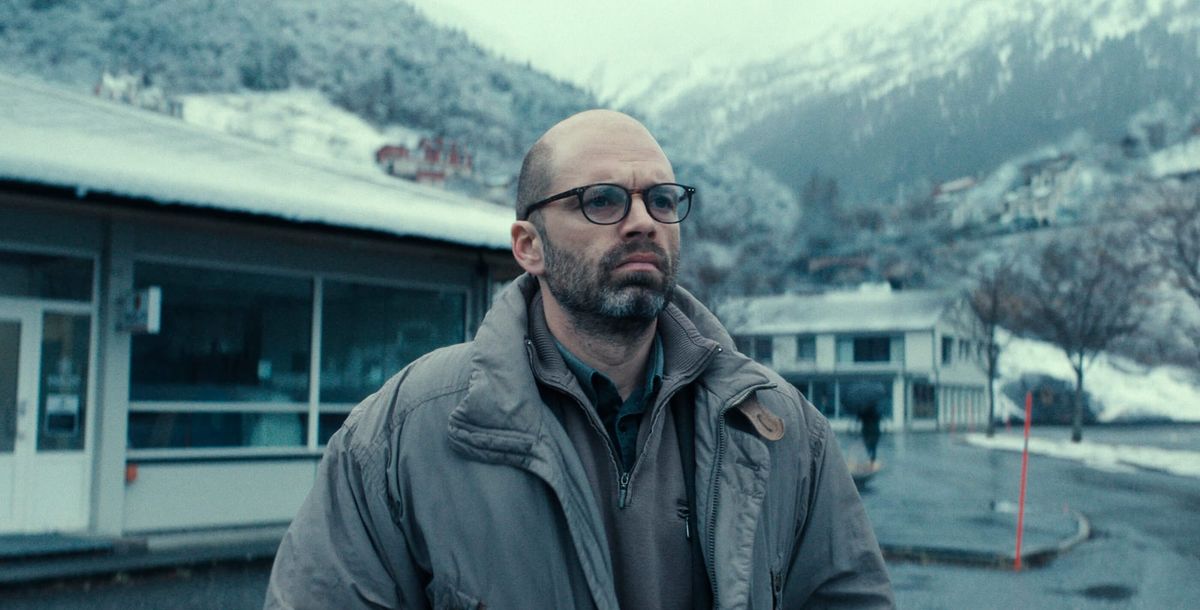
The story centers on a conservative Christian family who immigrate to Norway from Romania. Mihai (played by Sebastian Stan) and Lisbet (Renate Reinsve) have five children and a strict parenting style: We are shown, at multiple points, the system by which the children receive "points" for bad behavior (which includes, among other things, not praying and not studying their Bibles), though the exact punishment for accumulating too many points is left unspecified.
Soon after their arrival, the two oldest children, Elia and Emmanuel, befriend their nextdoor neighbors' daughter Noora. The film establishes a very explicit contrast between the two families: Noora's parents are much more progressive and permissive in their approach to discipline and behavior. Noora has a phone; Elia and Emmanuel don't. Noora's parents would never think of using physical punishment, while Mihai and Lisbet admit to having spanked their kids in the past.
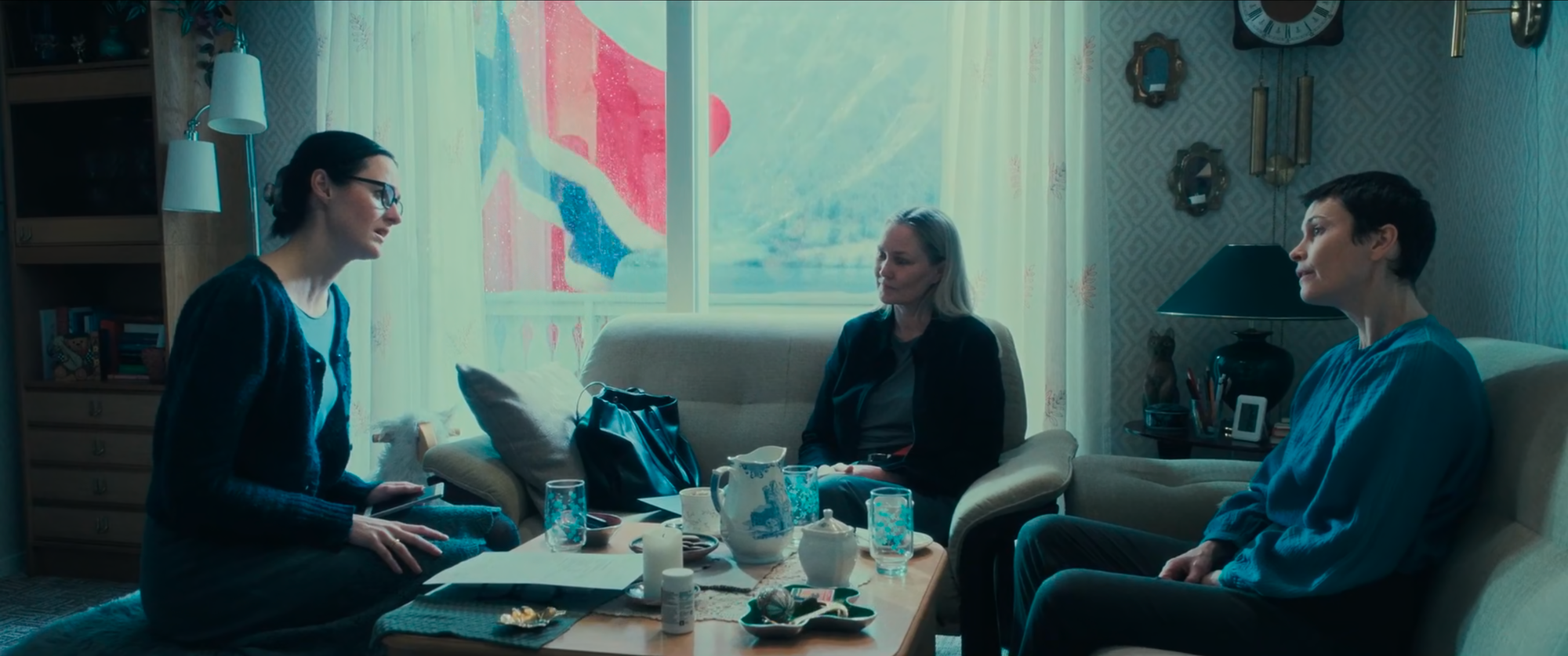
The main plot takes a while to get going, but it turns out that this practice of corporal punishment — and, by extension, the question of whether this Romanian family has abused their kids — is at the heart of the narrative. When Elia shows up to school one day with bruises on her face and neck, administrators start asking questions and Norway's child protection agency decides to intervene. Cops visit Mihai's workplace to question him, and state workers arrive at the family's house to take away the couple's children — all of them, including the still-nursing baby.
It's at this point that my frustration began: Because whether or not you take this film and its child custody battle seriously depends heavily on how accurate its depiction of the Norwegian legal system actually is. In Fjord, the bureaucrats who work at child protective services are incredibly powerful. They can remove children from a home seemingly at will before an investigation is completed, and some workers act with little care or compassion, stonewalling and obstructing Mihai and Lisbet's attempts to learn what the state is doing with their children. (They aren't all complete caricatures, fortunately; there are occasional, rare flashes of humanity.) Because I know absolutely nothing about how such systems function in Norway, I'm forced to take the film's word that this scenario is plausible. I'm entirely in the filmmakers' hands here.
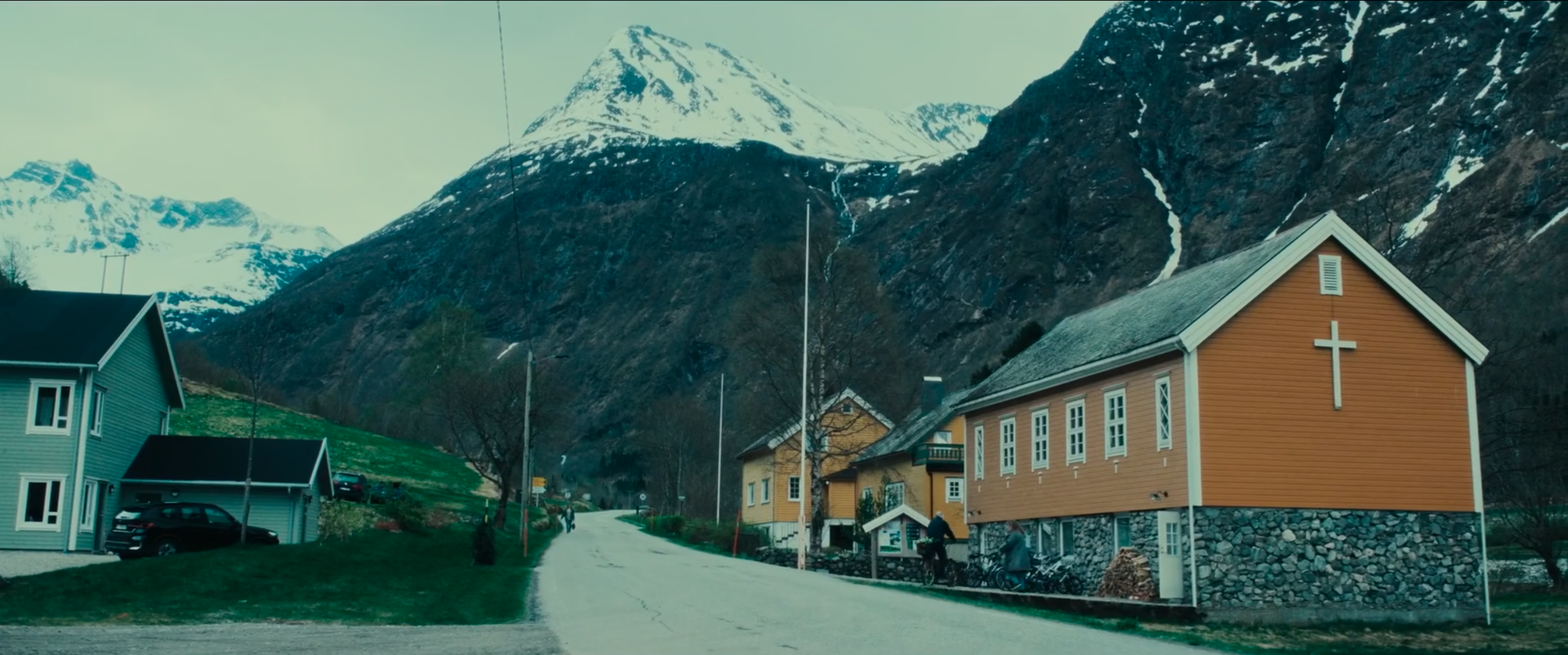
As the story unfolds, it becomes clear that director Cristian Mungiu is using the civil case against the couple as a way to explore the limits of tolerance in a liberal society. Most members of the small Norwegian town where this legal drama plays out are drastically intolerant toward the family's religious beliefs, which include (as the film goes out of its way to repeatedly tell us) a "traditional" view of marriage. Agents of the state are equally expressive in their distaste for Christianity, and the audience is obviously supposed to wonder whether Mihai and Lisbet are being persecuted because of their faith, rather than out of a genuine concern for child welfare.
I want to be clear: I don't enjoy films that simply regurgitate my own progressive values back at me. Despite my dislike of homophobic religious beliefs and my opposition to the physical punishment of children, I'd actually be interested in seeing a movie that seriously and rigorously explores the dynamics of a conservative religious family like this. But Fjord doesn't care about doing so! Instead it adopts a distanced, neutral approach that refuses to get inside its characters' heads and, thus, is incapable of really exploring the issues it claims to care about with any depth or nuance.
For example: I've seen at least one reviewer state that Mihai and Lisbet are Catholic, but that's definitely wrong. However, I can understand why someone might make that mistake because the film isn't actually concerned with the family's faith per se. Rather, it wants to use the family's poorly defined evangelicalism as a plot mechanic and the foundation for a story about persecution and legal railroading. We get tiny glimpses of Mihai talking in broad generalities about Jesus and playing notes of "Amazing Grace" on the school piano, but we learn nothing about, for example, how their local church functions; how and whether any of the family members struggle with doubt; or even why their faith is so meaningful to them. (I found myself unfavorably comparing the film to last year's The Testament of Ann Lee, a very different film in many ways but one that's actually interested in the religious aspect of a religious persecution story.) Strategic vagueness about important character traits is one of the film's primary artistic choices, and the story suffers because of it.
Most frustrating of all, the film isn't even all that interested in the implications of its premise: How does evangelical parenting affect kids? Are the imposition of conservative beliefs about gender and sexuality a form of abuse in themselves? What do these children really think about their parents' use of physical punishment? We don't ever get answers or even satisfying attempted answers to these questions. Instead, Elia and Emmanuel are portrayed as dedicated, unwavering believers who then vanish from the story for long stretches of time so the film can focus on a contrived courtroom drama instead. (The family's younger children are essentially nonentities.) Ultimately, the question of how Elia ended up with bruises — the story's entire inciting incident — is never resolved. That's clearly a deliberate choice, but one that, to me, felt wrong.
Fjord is playing at the Ross through Wednesday, November 25. You can find specific showtimes on the theater's website.
Coming Soon
- All About My Mother, a one night only screening TONIGHT (Monday, November 23).
- Volver, a one night only screening on Tuesday, November 24.
- Women On The Verge of a Nervous Breakdown, a one night only screening on Wednesday, November 25.
- Bitter Christmas, which opens Friday, November 27 and runs through Sunday, December 6.
- Crocodile Dose, a one night only screening on Tuesday, December 1.
- Scanners, a one night only screening on Wednesday, December 2.
- Blow Out, a one night only screening on Sunday, December 6.
- Prancer, a one night only screening on Sunday, December 6.
- The Land Returns, a one night only screening on Monday, December 14. (Due to maintenance project at the Ross, the screening will take place across the street at the Carson Center for Emerging Media Arts.)
- Queen at Sea, which opens Friday, January 8 and runs through Thursday, January 14.
- Once Upon a Time in Harlem, which opens Friday, January 8 and runs through Thursday, January 21.
- Rose, which opens Friday, January 15 and runs through Thursday, January 28.
- Tangles, which opens Friday, January 22 and runs through Thursday, January 28.
- The Friend's House is Here, which opens Friday, February 12 and runs through Thursday, February 18.
- Everybody Digs Bill Evans, which opens Friday, February 26 and runs through Thursday, March 4.