A beautiful, pessimistic film about the limits of literary fame
Now Playing: Fatherland

Hi,
If you're new to the newsletter, welcome and thanks for being here. This post is part of an occasional series where I review films playing at the Ross Media Arts Center.
Today, I've got a piece about Fatherland, a sad and lovely movie about German novelist Thomas Mann and his fraught relationship with his home country in the wake of World War II.
It's been described as the third installment of director Paweł Pawlikowski's so-called Cold War trilogy. But from what I understand, the movies have only a loose, thematic connection to each other. I personally appreciated Fatherland as a standalone film despite not having seen Pawlikowski's other work. So if that also describes you, don't let it stop you from checking this one out.
Also I hate having to ask all the time but please consider signing up for a paid subscription (just $5 a month or $50 for the whole year). The newsletter could use your support (and thanks to everyone who already contributes):
You can also support me on Patreon (and receive a complimentary paid subscription in exchange) or leave a one-time tip, which is always appreciated.
There's also a schedule of the Ross's upcoming films at the bottom of this post. I'm particularly intrigued by the series on the movies of Spanish director Pedro Almodóvar happening later this month.
~ Ty
P.S. If you see any of the films I write about, please share your thoughts. Only paid subscribers can comment below, but anyone can send me an email: tynanstewart@proton.me or just hit reply.
Now Playing: Fatherland
In 1949, Thomas Mann, the Nobel Prize-winning novelist who fled Germany when Hitler rose to power, penned an essay for the New York Times Magazine about the experience of revisiting his home country after the defeat of the Nazis. In it, he wrote that:
Curiously enough, my existence and the reaction to it in Germany have assumed a certain symbolic significance. Discussion of them—which is far too common—scarcely carries the character of literary criticism any longer. It has become a controversy between two views of Germany, a dispute over the road to Germany's future.
While Mann found his reception curious, it doesn't seem particularly surprising in retrospect given the political situation at the time. The Cold War was, by this point, well underway and both sides of the Iron Curtain saw value in claiming Mann, a widely revered author and outspoken antifascist, as their own.
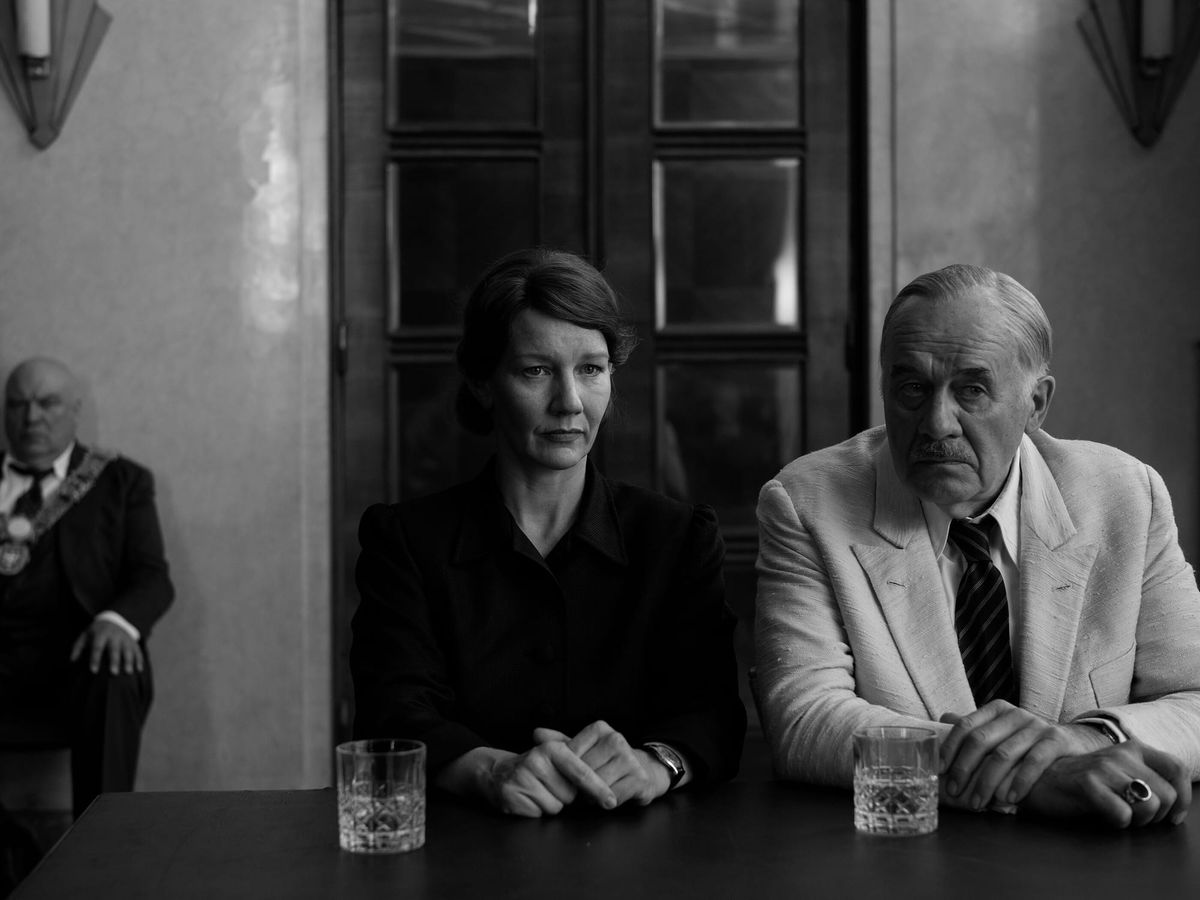
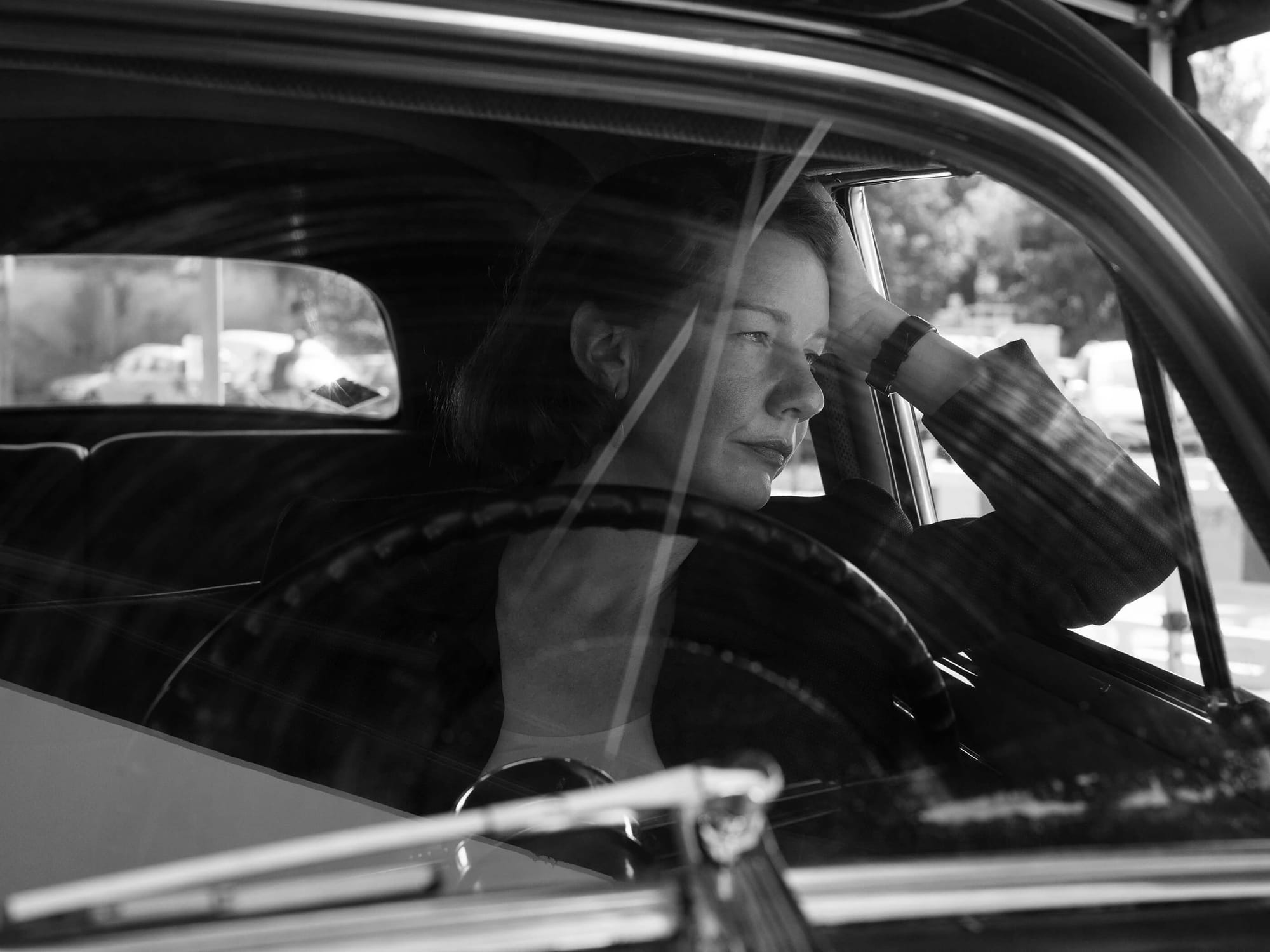
Fatherland dramatizes this story of Mann's return to a country divided. We follow Mann (played by Hanns Zischler) and his daughter Erika (played by Sandra Hüller) as they visit Frankfurt in West Germany and then the Soviet-controlled Weimar region in sequences that are both visually and thematically parallel. Though the film at times feels grand and grapples with sweeping historical ideas, the story is remarkably slight and self-contained, giving us a brief glimpse into Mann's life without spending much time on context or exposition. If you're not already familiar with the real Thomas Mann or don't know much about mid-century European politics, parts of Fatherland might feel a bit opaque.
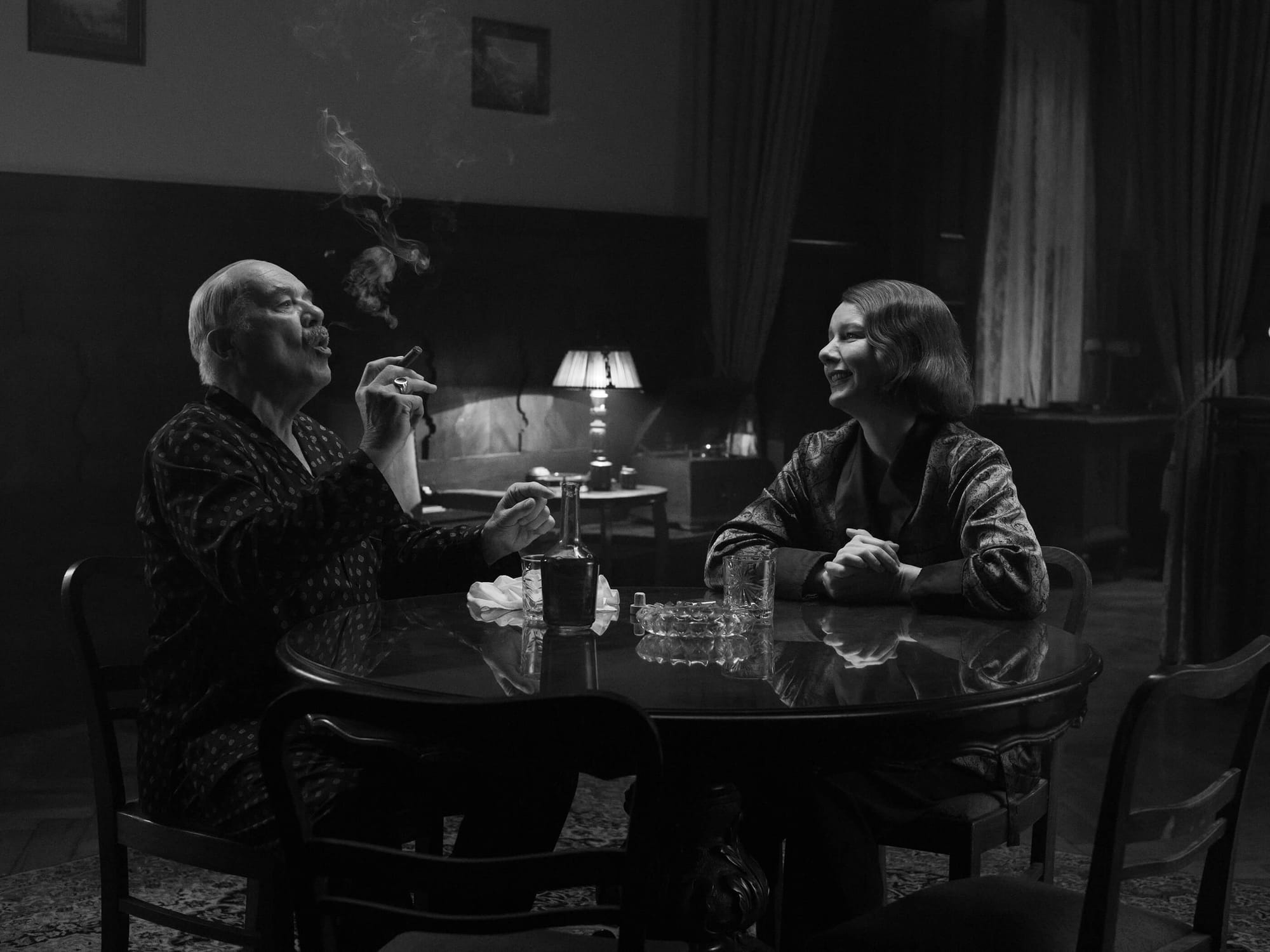
I'm not exactly an expert on post-war Germany. Even so, I found the emotional core of the story — the relationship between father and daughter — effective and compelling. Erika serves as her father's assistant, translating for him at press conferences, driving him between West and East Germany, editing his speeches, even selecting his clothes and shaving his face. But her most important role in the story is to pierce her father's cold stoicism in the wake of a family tragedy and to challenge his (in her eyes) misguided conviction that he can unify the German people with his words. Erika seems more aware — or at least more willing to admit — that both sides of Cold War-era Germany are cynically using her father's image for their own ideological ends. (Her brother Klaus, who plays an important and tragic role in the story, memorably describes the divide as an absurd choice between Stalin and Mickey Mouse.)
Fatherland strikes me as both a beautiful and deeply pessimistic film. Mann and Erika's visit to Frankfurt should be triumphant: He is there to accept the Goethe prize, an honor named for one of his literary heroes. Yet the two expats are constantly confronted by reminders that fascists and fascist sympathizers still thrive in Germany, despite the Allies' victory over the Nazis. Over in East Germany, officials welcome Mann with over-the-top courtesy, including with a children's choir who chant in unison about their respect for his work (though none seems old enough to have read The Magic Mountain). But he is also visited by a dissident who pleads with him to speak out about the treatment of political prisoners in East Germany before being dragged away by a pair of unspeaking men (presumably members of the secret police). There's a strong sense that political change is happening on both sides of the Iron Curtain without actually changing conditions for the better. In this context, Mann's weighty, literary speeches in front of capitalists and communists alike are, as Erika remarks, "just background music."
More than anything, Fatherland feels like a film about how artists change into relics — though not in the sense that they become obsolete. I mean something more literal: In one of the film's final sequences, Mann is treated to a tour of Goethe's home, including the room where he died. And as he looks at the preserved remnants of this dead author — which, in this secular state, bear an uncanny resemblance to the sanctified remains of religious saints — a Soviet photographer snaps a picture of him to use in some forgettable piece of propaganda. You can feel Mann transforming into something both more and less than a real person, taking on what he described in his New York Times essay as "a certain symbolic significance." It's this metamorphosis that Erika recognizes and pushes against and that Mann, in the film's final emotional scene (which I won't spoil here), seems to quietly rebel against, if only for a moment.
Fatherland is playing at the Ross through Thursday, November 25. You can find specific showtimes on the theater's website.
Coming Soon
- The Skin I Live In, a one night only screening on Sunday, November 22.
- All About My Mother, a one night only screening on Monday, November 23.
- Volver, a one night only screening on Tuesday, November 24.
- Women On The Verge of a Nervous Breakdown, a one night only screening on Wednesday, November 25.
- Bitter Christmas, which opens Friday, November 27 and runs through Sunday, December 6.
- Crocodile Dose, a one night only screening on Tuesday, December 1.
- Scanners, a one night only screening on Wednesday, December 2.
- Blow Out, a one night only screening on Sunday, December 6.
- Prancer, a one night only screening on Sunday, December 6.
- The Land Returns, a one night only screening on Monday, December 14. (Due to maintenance project at the Ross, the screening will take place across the street at the Carson Center for Emerging Media Arts.)
- Queen at Sea, which opens Friday, January 8 and runs through Thursday, January 14.
- Once Upon a Time in Harlem, which opens Friday, January 8 and runs through Thursday, January 21.
- Rose, which opens Friday, January 15 and runs through Thursday, January 28.
- Tangles, which opens Friday, January 22 and runs through Thursday, January 28.
- The Friend's House is Here, which opens Friday, February 12 and runs through Thursday, February 18.
- Everybody Digs Bill Evans, which opens Friday, February 26 and runs through Thursday, March 4.